Word Explanation
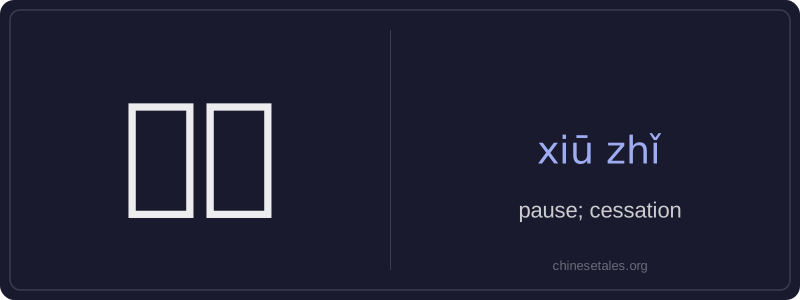
休止 is a formal noun meaning 'pause' or 'cessation'—a temporary or complete stop in activity, sound, motion, or process. The character 休 (xiū) originally depicts a person resting under a tree and carries meanings of rest, pause, or cessation; 止 (zhǐ) means 'to stop' or 'to halt', often used in compound words to emphasize termination. Together, they form a literary or technical term that conveys a deliberate, often brief interruption—not just physical stillness but also the suspension of action, speech, or function.
This word appears frequently in music (e.g., a rest in notation), medicine (e.g., cardiac pause), literature (describing narrative breaks), and official documents. It is more formal than common alternatives like 暂停 or 中断 and rarely occurs in casual daily speech. Learners should note it’s not typically used for everyday pauses like 'taking a coffee break'—that would be 休息 instead.
Example Sentences
Related Words
见面
见面 literally means 'see face' — combining 见 (t
背后
背后 literally means 'back + behind' and functions
中学
'Zhōngxué' literally combines 'zhōng' (middle)
面条
‘面条’ (miàn tiáo) literally means ‘flour str
后来
Later (hòulái) is an adverb meaning 'afterwards'
我的
我的 (wǒ de) is a possessive pronoun meaning 'my'
这么
这么 (zhè me) is an adverb meaning 'so' or 'this
前面
前面 (qián miàn) literally combines 前 (qián, '