Word Explanation
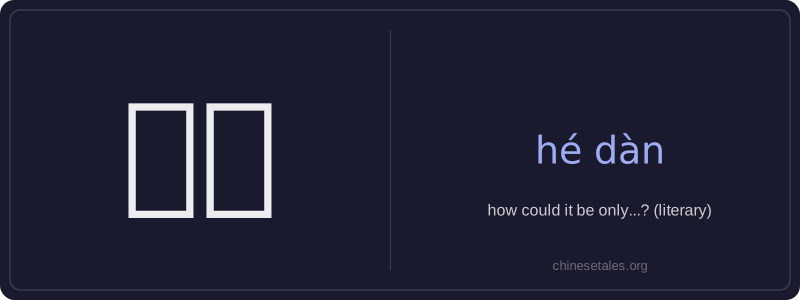
何但 is a literary conjunction meaning 'how could it be only...?' or 'not to mention...' — it introduces an emphatic contrast, implying that if the first (lesser or more obvious) thing is true, then the second (greater or less obvious) thing must certainly be true as well. The character 何 (hé) functions here as an interrogative adverb meaning 'how' or 'why', while 但 (dàn) means 'only' or 'merely'; together, they form a rhetorical structure that negates limitation and signals escalation.
This expression appears almost exclusively in formal writing, classical texts, or highly stylized modern prose — such as historical essays, political speeches, or literary criticism. It is not used in everyday conversation. Its tone is elevated and persuasive, often employed to strengthen an argument by extending its scope beyond the immediately stated point. Learners should recognize it as a fixed literary pattern rather than a productive phrase for active use.
Example Sentences
Related Words
见面
见面 literally means 'see face' — combining 见 (t
背后
背后 literally means 'back + behind' and functions
中学
'Zhōngxué' literally combines 'zhōng' (middle)
面条
‘面条’ (miàn tiáo) literally means ‘flour str
后来
Later (hòulái) is an adverb meaning 'afterwards'
我的
我的 (wǒ de) is a possessive pronoun meaning 'my'
这么
这么 (zhè me) is an adverb meaning 'so' or 'this
前面
前面 (qián miàn) literally combines 前 (qián, '