Word Explanation
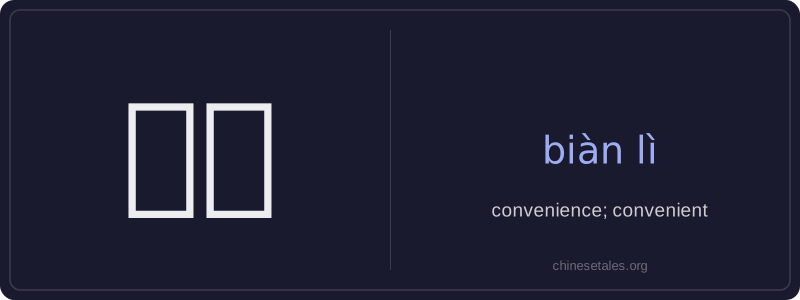
便利 (biàn lì) means 'convenience' as a noun or 'convenient' as an adjective. The character 便 (biàn) conveys 'ease' or 'readiness', while 利 (lì) means 'advantage' or 'benefit'; together, they express the idea of something that makes life easier or more efficient. It is commonly used to describe services, locations, tools, or features that save time, effort, or trouble — for example, convenient transportation, nearby shops, or user-friendly apps.
This word appears frequently in daily life contexts: public announcements, product descriptions, and casual conversation. As a noun, it often follows measure words like 一(种) or 有, e.g., 有一种便利 ('a kind of convenience'). As an adjective, it usually precedes nouns (便利的设施) or follows 是/很/不, e.g., 这个APP很方便. It carries a neutral-to-positive tone and is appropriate in both spoken and written Chinese.
Example Sentences
Related Words
见面
见面 literally means 'see face' — combining 见 (t
背后
背后 literally means 'back + behind' and functions
中学
'Zhōngxué' literally combines 'zhōng' (middle)
面条
‘面条’ (miàn tiáo) literally means ‘flour str
后来
Later (hòulái) is an adverb meaning 'afterwards'
我的
我的 (wǒ de) is a possessive pronoun meaning 'my'
这么
这么 (zhè me) is an adverb meaning 'so' or 'this
前面
前面 (qián miàn) literally combines 前 (qián, '