Word Explanation
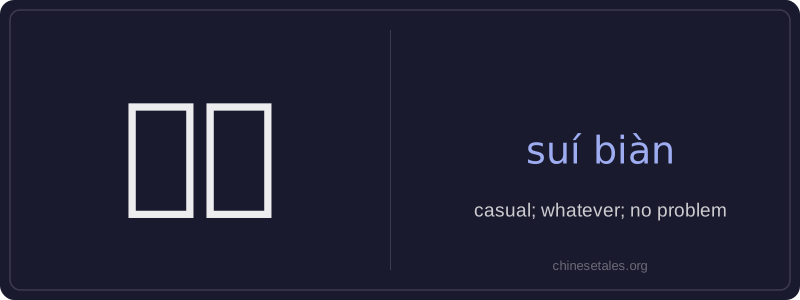
‘随便’ (suí biàn) literally combines ‘随’ (to follow, to go along with) and ‘便’ (convenience, ease), suggesting a lack of strict requirement or preference — essentially ‘as you like’ or ‘no particular preference’. It functions mainly as an adverb meaning ‘casually’, ‘freely’, or ‘at your discretion’, and sometimes as an adjective meaning ‘informal’ or ‘unrestricted’.
This word is extremely common in everyday spoken Chinese, especially when offering choices, declining suggestions politely, or expressing indifference. It carries a relaxed, friendly tone and is frequently used in service interactions, social invitations, and casual decision-making. While it can sound dismissive if overused or said with poor intonation, context and tone usually make the speaker’s intent clear — often conveying openness, flexibility, or polite non-insistence.
Example Sentences
Related Words
见面
见面 literally means 'see face' — combining 见 (t
背后
背后 literally means 'back + behind' and functions
中学
'Zhōngxué' literally combines 'zhōng' (middle)
面条
‘面条’ (miàn tiáo) literally means ‘flour str
后来
Later (hòulái) is an adverb meaning 'afterwards'
我的
我的 (wǒ de) is a possessive pronoun meaning 'my'
这么
这么 (zhè me) is an adverb meaning 'so' or 'this
前面
前面 (qián miàn) literally combines 前 (qián, '