Word Explanation
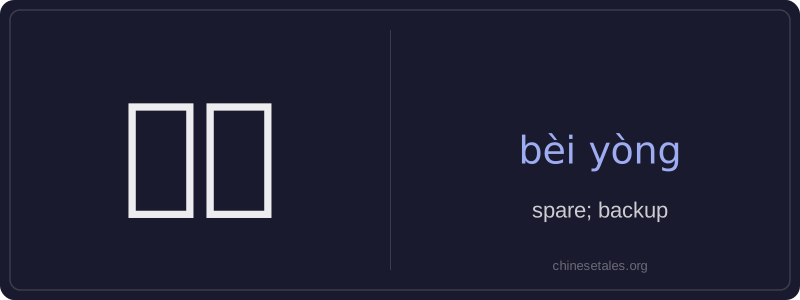
'备用' (bèi yòng) is an adjective meaning 'spare' or 'backup'—something kept in reserve for use when the primary item is unavailable, broken, or insufficient. The first character 备 (bèi) means 'to prepare' or 'to have ready,' while 用 (yòng) means 'to use.' Together, they literally convey 'prepared for use,' emphasizing readiness rather than immediate function. It commonly modifies nouns directly (e.g., 备用电池 'spare battery') and often appears in practical, everyday contexts like travel, technology, emergencies, or household management.
This term carries a neutral, functional tone and is widely used in both spoken and written Chinese. Unlike verbs such as '准备' (to prepare), 备用 itself is not used predicatively without a noun—it’s almost always attributive. It implies foresight and practicality, suggesting that the speaker has anticipated possible need. You’ll frequently see it on packaging, in instructions, or in conversations about contingency planning.
Example Sentences
Related Words
见面
见面 literally means 'see face' — combining 见 (t
背后
背后 literally means 'back + behind' and functions
中学
'Zhōngxué' literally combines 'zhōng' (middle)
面条
‘面条’ (miàn tiáo) literally means ‘flour str
后来
Later (hòulái) is an adverb meaning 'afterwards'
我的
我的 (wǒ de) is a possessive pronoun meaning 'my'
这么
这么 (zhè me) is an adverb meaning 'so' or 'this
前面
前面 (qián miàn) literally combines 前 (qián, '