Word Explanation
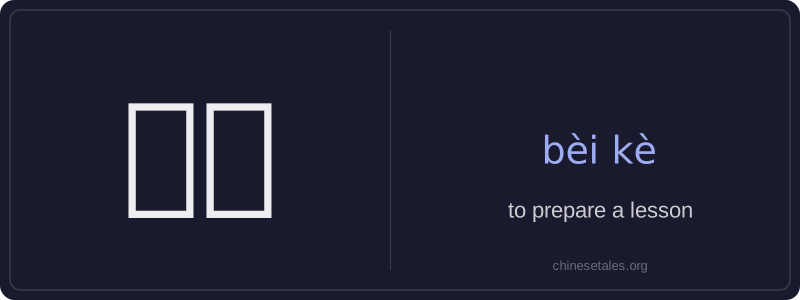
备课 (bèi kè) is a verb meaning 'to prepare a lesson'—the essential planning teachers do before teaching, including designing activities, selecting materials, writing lesson plans, and anticipating student questions. The character 备 (bèi) means 'to prepare' or 'to get ready', while 课 (kè) means 'lesson' or 'class'. Together, they form a compound verb that specifically refers to pedagogical preparation—not general studying or reviewing.
This term is used almost exclusively in educational contexts: by schoolteachers, university lecturers, tutors, and even corporate trainers preparing instructional sessions. It implies thoughtful, structured effort—not just skimming notes. While students may 'review lessons' (复习), only educators (or those assuming that role) 'prepare lessons' (备课). The activity often happens outside class hours and is considered fundamental to effective teaching in Chinese-speaking education systems.
Example Sentences
Related Words
见面
见面 literally means 'see face' — combining 见 (t
背后
背后 literally means 'back + behind' and functions
中学
'Zhōngxué' literally combines 'zhōng' (middle)
面条
‘面条’ (miàn tiáo) literally means ‘flour str
后来
Later (hòulái) is an adverb meaning 'afterwards'
我的
我的 (wǒ de) is a possessive pronoun meaning 'my'
这么
这么 (zhè me) is an adverb meaning 'so' or 'this
前面
前面 (qián miàn) literally combines 前 (qián, '