Word Explanation
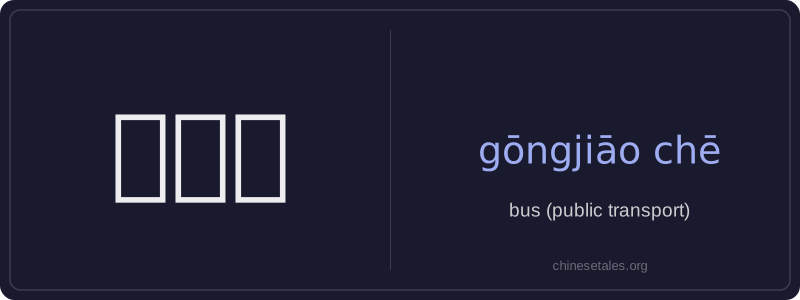
‘公交车’ literally means ‘public transport vehicle’ — ‘公’ (gōng) means ‘public’ or ‘shared’, ‘交’ (jiāo) is short for ‘交通’ (jiāotōng, ‘transportation’), and ‘车’ (chē) means ‘vehicle’ or ‘car’. Together, the term specifically refers to a city bus: a large motor vehicle that carries many passengers along fixed routes, usually operated by municipal authorities or licensed companies. It’s the standard, neutral term used in daily conversation, signage, maps, and official announcements across China.
This word emphasizes the public-service nature of the vehicle — it’s not a private car or taxi, but a shared mode of urban transit accessible to all. You’ll hear it in contexts like commuting, giving directions, checking schedules, or reporting delays. While regional terms exist (e.g., ‘巴士’ bāshì, borrowed from ‘bus’), ‘公交车’ is universally understood and preferred in formal and informal Mandarin alike.
Example Sentences
Related Words
见面
见面 literally means 'see face' — combining 见 (t
背后
背后 literally means 'back + behind' and functions
中学
'Zhōngxué' literally combines 'zhōng' (middle)
面条
‘面条’ (miàn tiáo) literally means ‘flour str
后来
Later (hòulái) is an adverb meaning 'afterwards'
我的
我的 (wǒ de) is a possessive pronoun meaning 'my'
这么
这么 (zhè me) is an adverb meaning 'so' or 'this
前面
前面 (qián miàn) literally combines 前 (qián, '