Word Explanation
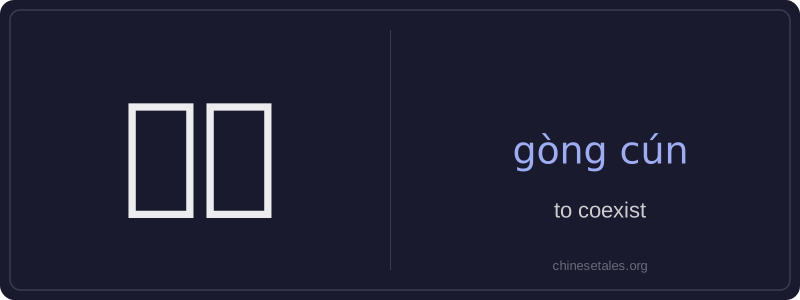
‘共存’ literally means ‘together exist’ — combining 共 (gòng, ‘together, jointly’) and 存 (cún, ‘to exist, to live’). As a verb, it expresses the idea of two or more entities existing simultaneously in the same space or time without necessarily merging or conflicting. It often implies peaceful, balanced, or sustainable coexistence — especially when differences (e.g., species, cultures, ideologies, or systems) are present but harmoniously accommodated.
This word is commonly used in ecological, social, and philosophical contexts: for example, describing how predators and prey maintain ecosystem balance, how diverse ethnic groups live side by side in a society, or how traditional and modern values operate in contemporary China. While it can appear in formal writing and speeches, it’s also found in everyday discussions about environmental protection, urban planning, and intercultural relations. It carries a positive, constructive connotation — suggesting intentionality and mutual respect rather than mere passive simultaneity.
Example Sentences
Related Words
见面
见面 literally means 'see face' — combining 见 (t
背后
背后 literally means 'back + behind' and functions
中学
'Zhōngxué' literally combines 'zhōng' (middle)
面条
‘面条’ (miàn tiáo) literally means ‘flour str
后来
Later (hòulái) is an adverb meaning 'afterwards'
我的
我的 (wǒ de) is a possessive pronoun meaning 'my'
这么
这么 (zhè me) is an adverb meaning 'so' or 'this
前面
前面 (qián miàn) literally combines 前 (qián, '