Word Explanation
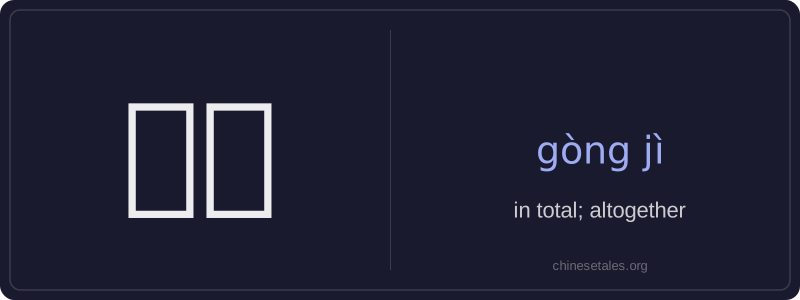
共计 is an adverb meaning 'in total' or 'altogether', used to introduce a sum or aggregate figure. It combines 共 (gòng), meaning 'together' or 'jointly', and 计 (jì), meaning 'to calculate' or 'to count'. Together, they literally mean 'to jointly calculate', emphasizing the final result of adding up multiple items, amounts, or occurrences. It is commonly found in formal writing, reports, financial summaries, academic texts, and spoken explanations where precision and clarity about totals are important.
The word typically appears at the beginning or middle of a sentence before a numeral or noun phrase indicating quantity—e.g., '共计127人' (127 people in total). Unlike colloquial alternatives like 一共, 共计 carries a slightly more formal, objective, and statistical tone, often implying careful enumeration rather than casual estimation. It does not function as a verb or noun on its own and must always modify a quantified expression.
Example Sentences
Related Words
见面
见面 literally means 'see face' — combining 见 (t
背后
背后 literally means 'back + behind' and functions
中学
'Zhōngxué' literally combines 'zhōng' (middle)
面条
‘面条’ (miàn tiáo) literally means ‘flour str
后来
Later (hòulái) is an adverb meaning 'afterwards'
我的
我的 (wǒ de) is a possessive pronoun meaning 'my'
这么
这么 (zhè me) is an adverb meaning 'so' or 'this
前面
前面 (qián miàn) literally combines 前 (qián, '