Word Explanation
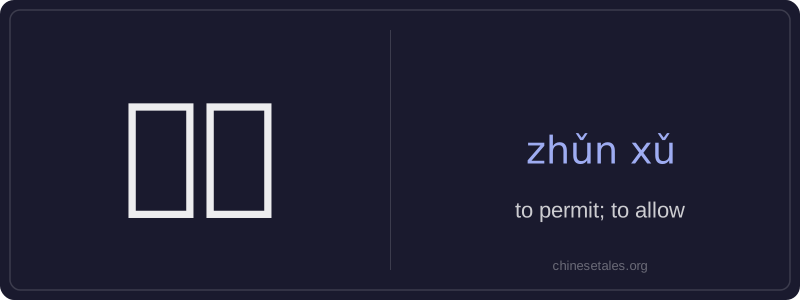
准许 is a formal, transitive verb meaning 'to permit' or 'to allow', typically used in official, administrative, or institutional contexts. It combines 准 (zhǔn), meaning 'to approve' or 'to authorize', and 许 (xǔ), meaning 'to permit' or 'to consent'. Together, they reinforce the sense of official sanction — not casual allowance, but a deliberate, often documented, granting of permission. You’ll commonly see it in regulations, school policies, government notices, or workplace guidelines.
The word implies authority: the subject must have the power to grant permission (e.g., a teacher, supervisor, or regulatory body), and the object is usually an action, person, or thing being permitted. It’s more formal than 允许 and stronger than 可以; using 准许 suggests procedural legitimacy rather than mere possibility or personal willingness. It rarely appears in casual speech among friends or family — there, you’d use 更好 or 就可以了 instead.
Example Sentences
Related Words
见面
见面 literally means 'see face' — combining 见 (t
背后
背后 literally means 'back + behind' and functions
中学
'Zhōngxué' literally combines 'zhōng' (middle)
面条
‘面条’ (miàn tiáo) literally means ‘flour str
后来
Later (hòulái) is an adverb meaning 'afterwards'
我的
我的 (wǒ de) is a possessive pronoun meaning 'my'
这么
这么 (zhè me) is an adverb meaning 'so' or 'this
前面
前面 (qián miàn) literally combines 前 (qián, '