Word Explanation
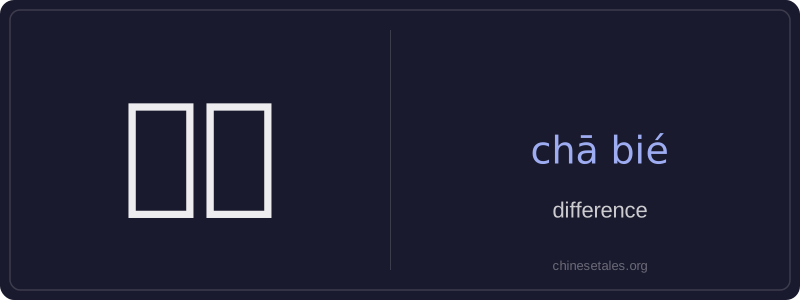
‘差别’ (chābié) is a noun meaning ‘difference’—especially a noticeable, measurable, or meaningful distinction between two or more things. The first character 差 (chā) means ‘difference’ or ‘discrepancy’, and the second 别 (bié) reinforces the sense of ‘separation’ or ‘distinction’. Together, they form a compound that emphasizes contrast—not just in appearance or quantity, but often in quality, status, or function. It’s commonly used in comparisons involving people, objects, situations, or outcomes.
This word appears frequently in daily life: comparing prices, educational backgrounds, cultural habits, or work performance. Unlike the more neutral ‘不同’ (bùtóng), ‘差别’ often carries a subtle implication that the difference matters—it may suggest inequality, variation in degree, or grounds for judgment. It’s standard in both spoken and written Chinese, though slightly more formal than ‘不一样’.
Example Sentences
Related Words
见面
见面 literally means 'see face' — combining 见 (t
背后
背后 literally means 'back + behind' and functions
中学
'Zhōngxué' literally combines 'zhōng' (middle)
面条
‘面条’ (miàn tiáo) literally means ‘flour str
后来
Later (hòulái) is an adverb meaning 'afterwards'
我的
我的 (wǒ de) is a possessive pronoun meaning 'my'
这么
这么 (zhè me) is an adverb meaning 'so' or 'this
前面
前面 (qián miàn) literally combines 前 (qián, '