Word Explanation
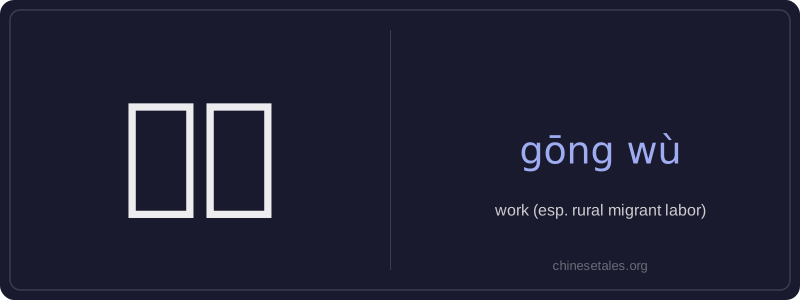
务工 (gōng wù) literally combines 务 (wù), meaning 'to engage in' or 'to devote oneself to', and 工 (gōng), meaning 'work' or 'labor'. Together, it functions as a noun referring specifically to the act or experience of working—especially for rural residents who migrate to cities or industrial areas for employment. Unlike the general verb 工作 (gōngzuò), 务工 carries strong sociocultural connotations of temporary, often manual or low-skilled labor undertaken away from one’s hometown.
This term appears frequently in news reports, policy documents, and everyday speech when discussing migrant workers, labor mobility, or socioeconomic development. It is rarely used for white-collar, local, or permanent positions; instead, it evokes images of construction sites, factories, or service jobs taken by people from villages or smaller towns. While grammatically a noun, 务工 often follows verbs like 去 (qù, 'to go'), 回 (huí, 'to return'), or 在 (zài, 'to be at') to indicate purpose or location of work.
Example Sentences
Related Words
见面
见面 literally means 'see face' — combining 见 (t
背后
背后 literally means 'back + behind' and functions
中学
'Zhōngxué' literally combines 'zhōng' (middle)
面条
‘面条’ (miàn tiáo) literally means ‘flour str
后来
Later (hòulái) is an adverb meaning 'afterwards'
我的
我的 (wǒ de) is a possessive pronoun meaning 'my'
这么
这么 (zhè me) is an adverb meaning 'so' or 'this
前面
前面 (qián miàn) literally combines 前 (qián, '