Word Explanation
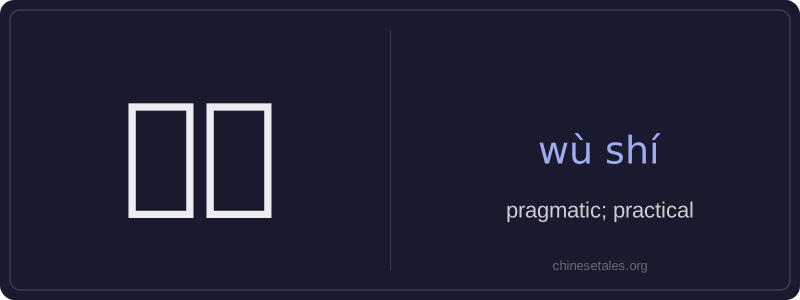
务实 (wù shí) is an adjective meaning 'pragmatic' or 'practical'—describing an approach that prioritizes realistic, workable solutions over idealistic theories or abstract ideas. The character 务 (wù) means 'to engage in', 'to devote oneself to', or 'to pursue', while 实 (shí) means 'real', 'solid', or 'substantial'. Together, they convey the idea of focusing on what is concrete, verifiable, and effective in real-world situations.
This word is commonly used in formal and semi-formal contexts: workplace discussions, policy debates, education, and personal development. It often appears in phrases like 务实的态度 (a pragmatic attitude) or 务实精神 (the spirit of pragmatism). While it carries a positive connotation—suggesting responsibility, groundedness, and efficiency—it can occasionally imply a lack of imagination if overemphasized. It contrasts with words like 理想主义 (idealism) or 空谈 (empty talk).
Example Sentences
Related Words
见面
见面 literally means 'see face' — combining 见 (t
背后
背后 literally means 'back + behind' and functions
中学
'Zhōngxué' literally combines 'zhōng' (middle)
面条
‘面条’ (miàn tiáo) literally means ‘flour str
后来
Later (hòulái) is an adverb meaning 'afterwards'
我的
我的 (wǒ de) is a possessive pronoun meaning 'my'
这么
这么 (zhè me) is an adverb meaning 'so' or 'this
前面
前面 (qián miàn) literally combines 前 (qián, '