Word Explanation
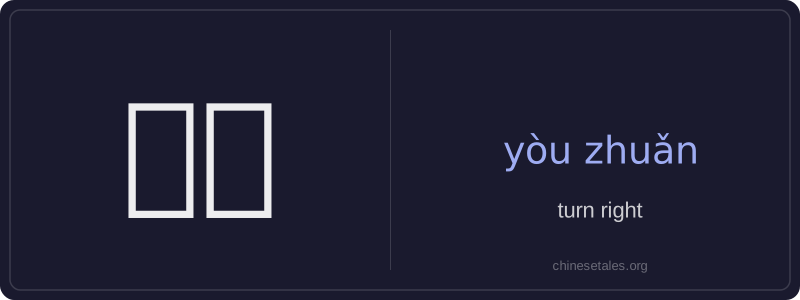
'Right turn' is a compound verb formed by combining 右 (yòu), meaning 'right' as in direction, and 转 (zhuǎn), meaning 'to turn' or 'to rotate'. Together, they describe the physical action of changing direction 90 degrees to the right — most commonly used when giving or following directions while walking, cycling, or driving. It functions as a verb phrase and typically appears after subject pronouns or nouns and before location complements or time adverbs.
This term is neutral in register and widely understood across all Chinese-speaking regions. You’ll hear it frequently in navigation apps, traffic signs (e.g., 右转箭头), spoken instructions from drivers or tour guides, and public announcements. Unlike some directional phrases, 右转 does not require an object — saying 'you need to 右转' is complete on its own. It’s also distinct from 右边 (yòu biān, 'the right side'), which is a noun referring to position rather than movement.
Example Sentences
Related Words
见面
见面 literally means 'see face' — combining 见 (t
背后
背后 literally means 'back + behind' and functions
中学
'Zhōngxué' literally combines 'zhōng' (middle)
面条
‘面条’ (miàn tiáo) literally means ‘flour str
后来
Later (hòulái) is an adverb meaning 'afterwards'
我的
我的 (wǒ de) is a possessive pronoun meaning 'my'
这么
这么 (zhè me) is an adverb meaning 'so' or 'this
前面
前面 (qián miàn) literally combines 前 (qián, '