Word Explanation
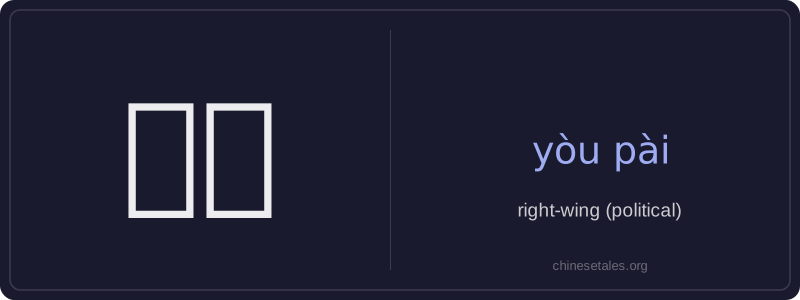
Right-wing (yòu pài) is a political term referring to individuals, groups, or ideologies that generally support traditional values, limited government intervention in the economy, strong national defense, and social conservatism. The character 右 (yòu) literally means 'right', and in political contexts it symbolizes the conservative or reactionary end of the ideological spectrum; 派 (pài) means 'faction', 'school', or 'group', indicating a collective with shared beliefs or affiliations. Together, 右派 denotes a cohesive political grouping aligned with right-leaning principles.
This term is used primarily in academic, journalistic, and historical discussions — especially when analyzing political systems, party dynamics, or ideological debates in China, Taiwan, or broader Sinophone contexts. While historically charged (e.g., during mid-20th-century political campaigns), modern usage is largely descriptive and neutral in analytical writing, though tone and context strongly affect perception. It contrasts directly with 左派 (zuǒ pài, 'left-wing') and should not be confused with directional terms like 'right side' (also 右).
Example Sentences
Related Words
见面
见面 literally means 'see face' — combining 见 (t
背后
背后 literally means 'back + behind' and functions
中学
'Zhōngxué' literally combines 'zhōng' (middle)
面条
‘面条’ (miàn tiáo) literally means ‘flour str
后来
Later (hòulái) is an adverb meaning 'afterwards'
我的
我的 (wǒ de) is a possessive pronoun meaning 'my'
这么
这么 (zhè me) is an adverb meaning 'so' or 'this
前面
前面 (qián miàn) literally combines 前 (qián, '