Word Explanation
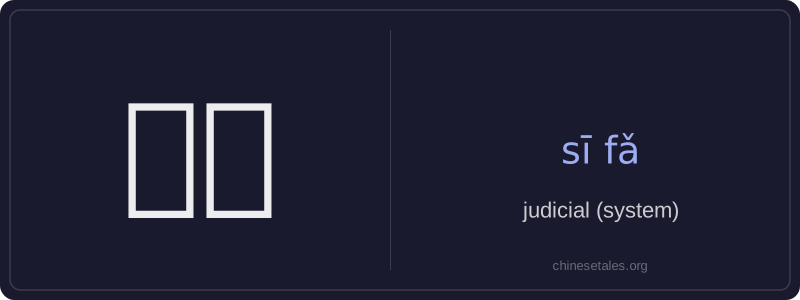
司法 (sī fǎ) literally means 'to manage law' — 司 (sī) means 'to manage, to administer', and 法 (fǎ) means 'law, legal system'. Together, they form a compound noun referring specifically to the judicial branch of government: the system and institutions responsible for interpreting laws, adjudicating disputes, and administering justice — including courts, judges, prosecutors, and related legal procedures. It is a formal, institutional term used in official, academic, or news contexts, not in casual speech.
The word almost always appears in collocations like 司法机关 (judicial organs), 司法独立 (judicial independence), or 司法改革 (judicial reform). It contrasts with 立法 (legislation) and 行政 (administration/executive), forming one of the three pillars of modern governance. While it can occasionally function adjectivally (e.g., 司法程序 'judicial procedure'), its core usage is as a noun denoting the system itself.
Example Sentences
Related Words
见面
见面 literally means 'see face' — combining 见 (t
背后
背后 literally means 'back + behind' and functions
中学
'Zhōngxué' literally combines 'zhōng' (middle)
面条
‘面条’ (miàn tiáo) literally means ‘flour str
后来
Later (hòulái) is an adverb meaning 'afterwards'
我的
我的 (wǒ de) is a possessive pronoun meaning 'my'
这么
这么 (zhè me) is an adverb meaning 'so' or 'this
前面
前面 (qián miàn) literally combines 前 (qián, '