Word Explanation
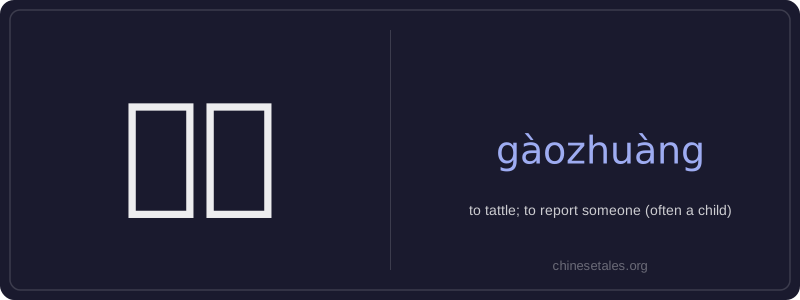
‘告状’ literally combines ‘告’ (to report, inform) and ‘状’ (a formal complaint or accusation, historically a written petition to authorities). Together, it means to tattle or snitch — typically by reporting someone’s misbehavior to a person in authority, such as a parent, teacher, or supervisor. It carries a mildly negative or childish connotation, implying the reporter is seeking punishment or advantage rather than resolving the issue directly.
The word is most commonly used in everyday spoken Chinese, especially when describing children’s behavior at home or school. Adults may use it playfully or critically — for example, teasing a colleague who complains about a minor workplace issue, or scolding a child for escalating a small conflict instead of negotiating. While grammatically a verb, ‘告状’ functions as a separable verb: you can say ‘告他的状’ (report *his* wrongdoing) or ‘去告状’ (go tattle), but not ‘告状了他’.
Example Sentences
Related Words
见面
见面 literally means 'see face' — combining 见 (t
背后
背后 literally means 'back + behind' and functions
中学
'Zhōngxué' literally combines 'zhōng' (middle)
面条
‘面条’ (miàn tiáo) literally means ‘flour str
后来
Later (hòulái) is an adverb meaning 'afterwards'
我的
我的 (wǒ de) is a possessive pronoun meaning 'my'
这么
这么 (zhè me) is an adverb meaning 'so' or 'this
前面
前面 (qián miàn) literally combines 前 (qián, '