Word Explanation
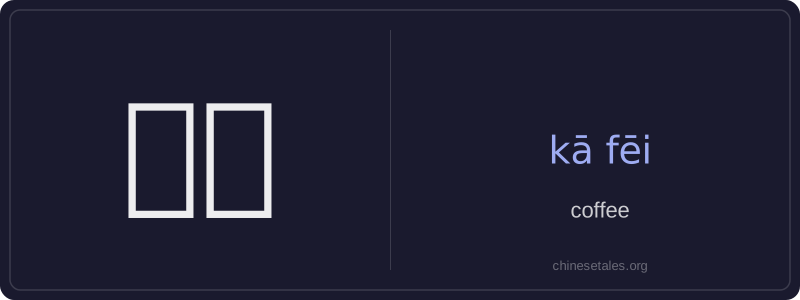
'Kāfēi' is a loanword from English 'coffee', written with two phonetic characters that together represent the foreign pronunciation. Neither 咖 nor 啡 carries independent meaning in this context — they function purely as sound symbols, not semantic components. This is common for transliterated words in Chinese, especially for food and drink items introduced from abroad.
The word is used identically to its English counterpart: it refers to the brewed beverage made from roasted coffee beans, or sometimes to the beans themselves. It appears frequently in daily life — in cafés, at home, in office settings — and is often modified by measure words like '杯' (bēi, 'cup') or '杯咖啡' (a cup of coffee). While traditionally associated with Western culture, kāfēi is now fully integrated into modern Chinese urban life and everyday vocabulary.
Example Sentences
Related Words
见面
见面 literally means 'see face' — combining 见 (t
背后
背后 literally means 'back + behind' and functions
中学
'Zhōngxué' literally combines 'zhōng' (middle)
面条
‘面条’ (miàn tiáo) literally means ‘flour str
后来
Later (hòulái) is an adverb meaning 'afterwards'
我的
我的 (wǒ de) is a possessive pronoun meaning 'my'
这么
这么 (zhè me) is an adverb meaning 'so' or 'this
前面
前面 (qián miàn) literally combines 前 (qián, '