Word Explanation
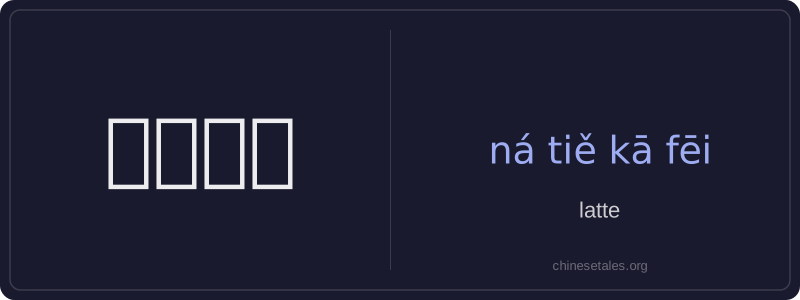
'拿铁咖啡' (ná tiě kā fēi) is the standard Mandarin term for 'latte', a popular coffee drink made with espresso and steamed milk, often topped with a thin layer of foam. Though it looks like a native Chinese compound, it's actually a phonetic transliteration of the Italian word 'latte' (meaning 'milk'), combined with the Chinese word for coffee (咖啡). The characters 拿 and 铁 were chosen solely for their sound — 'ná tiě' approximates 'latte' — and carry no semantic meaning here. This is common in Chinese loanwords, especially for food and beverages.
The term is widely used in urban cafés, menus, and daily conversation across China. It’s understood by most young and middle-aged adults, especially in cities. While '咖啡' alone means 'coffee', adding '拿铁' specifies the milk-heavy espresso-based preparation. Some people shorten it to '拿铁' in casual speech, but '拿铁咖啡' remains the full, unambiguous form on menus and formal contexts.
Example Sentences
Related Words
见面
见面 literally means 'see face' — combining 见 (t
背后
背后 literally means 'back + behind' and functions
中学
'Zhōngxué' literally combines 'zhōng' (middle)
面条
‘面条’ (miàn tiáo) literally means ‘flour str
后来
Later (hòulái) is an adverb meaning 'afterwards'
我的
我的 (wǒ de) is a possessive pronoun meaning 'my'
这么
这么 (zhè me) is an adverb meaning 'so' or 'this
前面
前面 (qián miàn) literally combines 前 (qián, '