Word Explanation
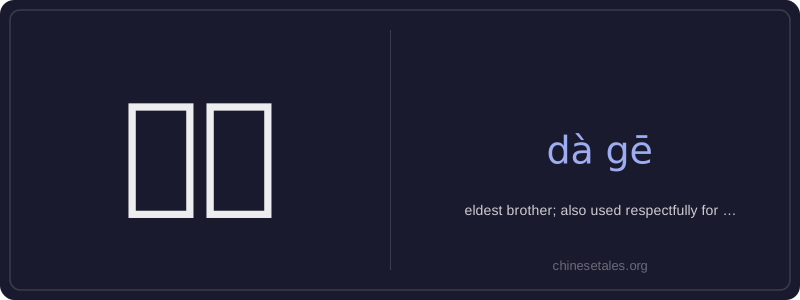
大哥 (dà gē) literally combines 大 (dà, 'big' or 'eldest') and 哥 (gē, 'older brother'), forming a term that primarily means 'eldest brother' in a family context. It emphasizes birth order and carries connotations of seniority, responsibility, and respect within the sibling hierarchy.
Beyond blood relations, 大哥 is widely used as an honorific for any older male peer—such as a senior colleague, a mentor, or even a friendly older acquaintance—to convey warmth and deference. Unlike formal titles like 先生 (xiānsheng), it feels more approachable and familial. In some regional dialects or informal groups, it may even be adopted playfully among peers regardless of actual age, though this depends heavily on context and relationship closeness.
Example Sentences
Related Words
见面
见面 literally means 'see face' — combining 见 (t
背后
背后 literally means 'back + behind' and functions
中学
'Zhōngxué' literally combines 'zhōng' (middle)
面条
‘面条’ (miàn tiáo) literally means ‘flour str
后来
Later (hòulái) is an adverb meaning 'afterwards'
我的
我的 (wǒ de) is a possessive pronoun meaning 'my'
这么
这么 (zhè me) is an adverb meaning 'so' or 'this
前面
前面 (qián miàn) literally combines 前 (qián, '