Word Explanation
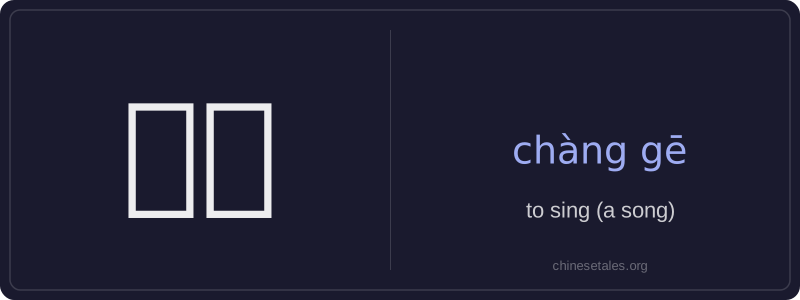
Chàng gē literally combines two characters: 唱 (chàng), meaning 'to sing' — a verb indicating vocal performance — and 歌 (gē), meaning 'song' or 'music'. Together, they form a compound verb meaning 'to sing (a song)'. Unlike English, where 'sing' alone often suffices, Chinese frequently uses this two-character verb for clarity and naturalness in everyday speech.
This verb is commonly used in casual, neutral contexts — for example, at home, in school music class, at karaoke, or during celebrations. It can appear with aspect particles like 了 (le) or 着 (zhe), and often follows subjects like 我 (I), 他 (he), or 孩子们 (children). While 唱 can stand alone in some formal or literary contexts, 唱歌 is the default, colloquial expression for the act of singing a song in daily life.
Example Sentences
Related Words
见面
见面 literally means 'see face' — combining 见 (t
背后
背后 literally means 'back + behind' and functions
中学
'Zhōngxué' literally combines 'zhōng' (middle)
面条
‘面条’ (miàn tiáo) literally means ‘flour str
后来
Later (hòulái) is an adverb meaning 'afterwards'
我的
我的 (wǒ de) is a possessive pronoun meaning 'my'
这么
这么 (zhè me) is an adverb meaning 'so' or 'this
前面
前面 (qián miàn) literally combines 前 (qián, '