Word Explanation
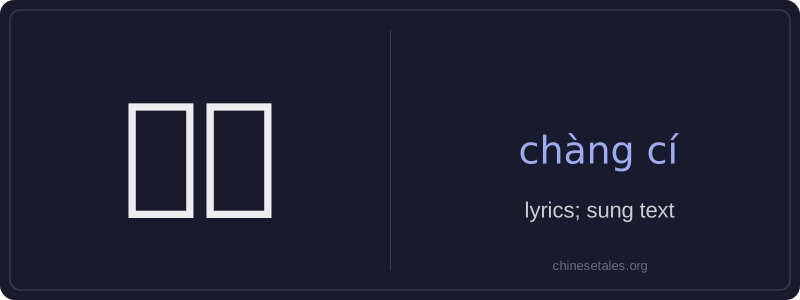
Chàng cí literally combines 唱 (chàng), meaning 'to sing', and 词 (cí), meaning 'words' or 'lyrics'. Together, they refer specifically to the words that are sung in songs—distinct from spoken dialogue or written poetry. Unlike the broader term 歌词 (gēcí), which is the standard word for 'song lyrics' in pop music, 唱词 carries a stronger association with traditional Chinese performing arts, especially opera (e.g., Peking opera, Kunqu) and narrative singing forms like tanci or pingshu.
It emphasizes the textual component intended for vocal performance, often with strict metrical, rhyming, or tonal requirements suited to musical phrasing. While modern usage sometimes overlaps with 歌词, 唱词 is more formal and culturally specific—it’s rarely used for casual pop songs or karaoke. Learners should recognize it primarily in contexts involving classical or regional Chinese music theatre, where the text is inseparable from its melodic and rhythmic delivery.
Example Sentences
Related Words
见面
见面 literally means 'see face' — combining 见 (t
背后
背后 literally means 'back + behind' and functions
中学
'Zhōngxué' literally combines 'zhōng' (middle)
面条
‘面条’ (miàn tiáo) literally means ‘flour str
后来
Later (hòulái) is an adverb meaning 'afterwards'
我的
我的 (wǒ de) is a possessive pronoun meaning 'my'
这么
这么 (zhè me) is an adverb meaning 'so' or 'this
前面
前面 (qián miàn) literally combines 前 (qián, '