Word Explanation
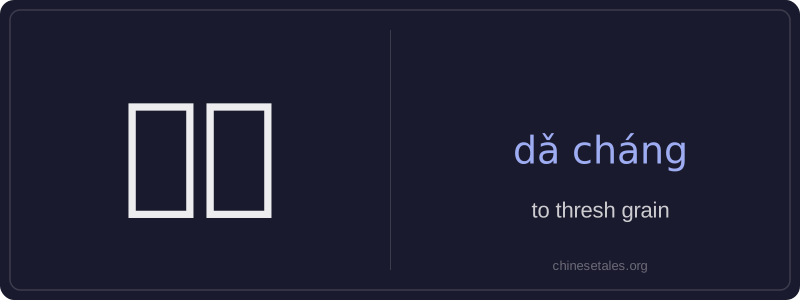
‘打场’ (dǎ cháng) is a traditional agricultural verb meaning 'to thresh grain' — the process of separating edible grains (like wheat, rice, or millet) from their inedible stalks and husks. The first character 打 (dǎ) literally means 'to strike' or 'to beat', reflecting the physical action involved — traditionally done by beating harvested sheaves against a hard surface or using flails. The second character 场 (cháng) here does not mean 'field' (its more common meaning), but specifically refers to a 'threshing floor': a flat, hard, open area where grain is laid out and processed.
This term evokes rural life and seasonal farming cycles, especially in northern China where wheat and millet are staple crops. While mechanized threshers have largely replaced manual methods, ‘打场’ remains widely understood and appears in literature, historical accounts, and discussions of traditional agriculture. It is not used for modern industrial processing, nor for harvesting or winnowing — those are distinct steps with different terms.
Example Sentences
Related Words
见面
见面 literally means 'see face' — combining 见 (t
背后
背后 literally means 'back + behind' and functions
中学
'Zhōngxué' literally combines 'zhōng' (middle)
面条
‘面条’ (miàn tiáo) literally means ‘flour str
后来
Later (hòulái) is an adverb meaning 'afterwards'
我的
我的 (wǒ de) is a possessive pronoun meaning 'my'
这么
这么 (zhè me) is an adverb meaning 'so' or 'this
前面
前面 (qián miàn) literally combines 前 (qián, '