Word Explanation
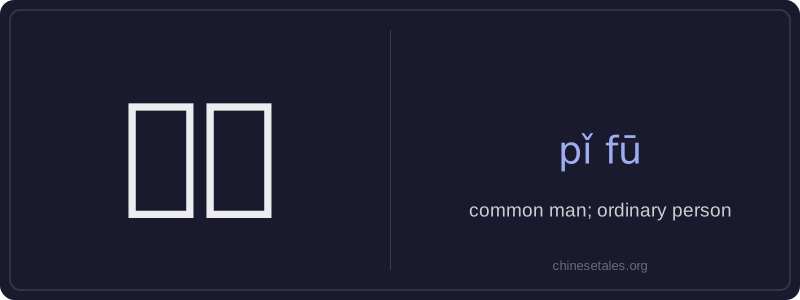
匹夫 literally combines 匹 (pǐ), originally a measure word for horses or cloth but here used archaically to mean 'individual' or 'single', and 夫 (fū), meaning 'man' or 'adult male'. Together, 匹夫 means 'common man' or 'ordinary person' — emphasizing someone without special status, power, or distinction. Historically, it carried neutral or slightly humble connotations, though in classical texts it could sometimes imply lack of cultivation or influence.
In modern usage, 匹夫 is mostly literary or rhetorical, appearing in set phrases like 匹夫之勇 (reckless courage of an ordinary man) or in formal speech and writing to evoke humility, shared humanity, or grassroots perspective. It is rarely used in casual conversation and never as a self-deprecating term in everyday contexts — unlike simpler words like 普通人. Its tone is modest but dignified, often evoking Confucian ideals of moral responsibility even among the unremarkable.
Example Sentences
Related Words
见面
见面 literally means 'see face' — combining 见 (t
背后
背后 literally means 'back + behind' and functions
中学
'Zhōngxué' literally combines 'zhōng' (middle)
面条
‘面条’ (miàn tiáo) literally means ‘flour str
后来
Later (hòulái) is an adverb meaning 'afterwards'
我的
我的 (wǒ de) is a possessive pronoun meaning 'my'
这么
这么 (zhè me) is an adverb meaning 'so' or 'this
前面
前面 (qián miàn) literally combines 前 (qián, '