Word Explanation
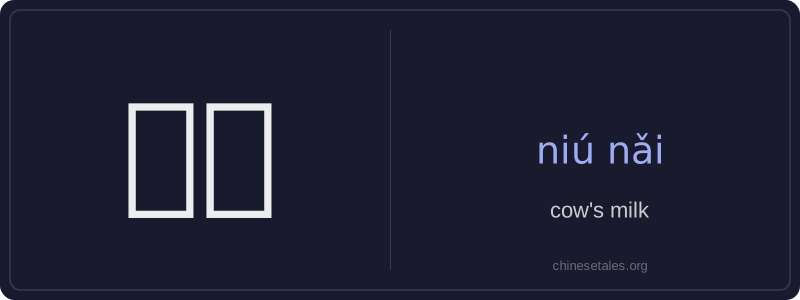
牛奶 literally means 'cow's milk' — 牛 (niú) means 'cow' or 'cattle', and 奶 (nǎi) means 'milk', especially mammalian milk. Though the term specifies cow’s milk, it is the default, unmarked word for 'milk' in everyday Mandarin — much like how English speakers say 'milk' without specifying the animal unless needed (e.g., 'soy milk'). It is a common food item consumed daily, often for nutrition, calcium intake, or as part of breakfast routines.
Milk in China is widely available in fresh, pasteurized, UHT (long-life), and powdered forms, and is frequently served warm or cold. While other animal milks exist (e.g., 羊奶 yáng nǎi 'goat’s milk'), 牛奶 dominates the market and cultural usage. It also appears in compound words like 牛奶瓶 (niú nǎi píng, 'milk bottle') and 牛奶糖 (niú nǎi táng, 'milk candy'), reinforcing its role as the lexical base for dairy-related concepts.
Example Sentences
Related Words
见面
见面 literally means 'see face' — combining 见 (t
背后
背后 literally means 'back + behind' and functions
中学
'Zhōngxué' literally combines 'zhōng' (middle)
面条
‘面条’ (miàn tiáo) literally means ‘flour str
后来
Later (hòulái) is an adverb meaning 'afterwards'
我的
我的 (wǒ de) is a possessive pronoun meaning 'my'
这么
这么 (zhè me) is an adverb meaning 'so' or 'this
前面
前面 (qián miàn) literally combines 前 (qián, '