Word Explanation
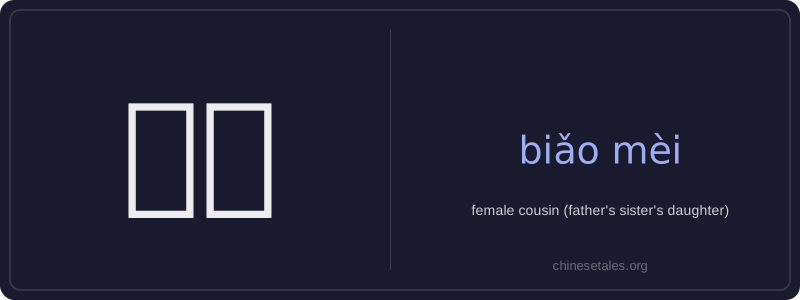
‘表妹’ (biǎo mèi) is a kinship term meaning ‘female cousin on the father’s sister’s side’ — specifically, the daughter of one’s paternal aunt. The first character, 表 (biǎo), denotes ‘maternal or paternal cousins’ (as opposed to 直系 zhíxì, ‘direct line’ relatives), while 妹 (mèi) means ‘younger sister’, signaling both female gender and younger age relative to the speaker. Unlike English ‘cousin’, which is gender- and lineage-neutral, Chinese kinship terms precisely specify gender, generational position, and whether the relationship is through the father’s or mother’s side.
This term is commonly used in family conversations, introductions, and storytelling. It carries a warm, familiar tone — often implying closeness, especially if the表妹 lives nearby or visits frequently. In formal writing or legal contexts, it may be replaced with more neutral terms like ‘堂/表亲’ (táng/biǎo qīn), but in daily speech, 表妹 remains the natural, respectful, and affectionate way to refer to this specific relative.
Example Sentences
Related Words
见面
见面 literally means 'see face' — combining 见 (t
背后
背后 literally means 'back + behind' and functions
中学
'Zhōngxué' literally combines 'zhōng' (middle)
面条
‘面条’ (miàn tiáo) literally means ‘flour str
后来
Later (hòulái) is an adverb meaning 'afterwards'
我的
我的 (wǒ de) is a possessive pronoun meaning 'my'
这么
这么 (zhè me) is an adverb meaning 'so' or 'this
前面
前面 (qián miàn) literally combines 前 (qián, '