Word Explanation
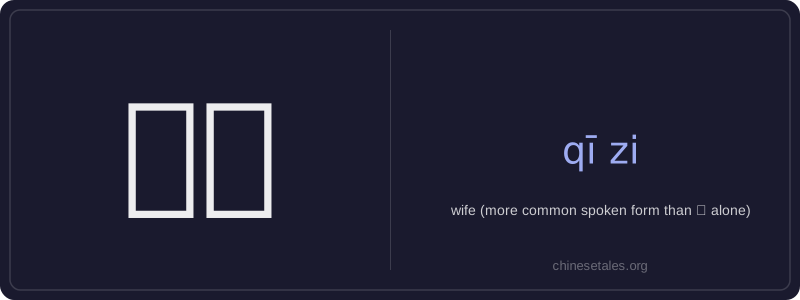
妻子 (qī zi) means 'wife' and is the most common, natural spoken term for a married woman in relation to her husband. While 妻 (qī) alone also means 'wife', it is formal, literary, or used in fixed expressions (e.g., 妻子儿女 'spouse and children'); 妻子 adds the neutral, grammatically light suffix 子 (zi), making it colloquial and widely used in everyday speech and writing.
The character 妻 originally depicted a woman kneeling with bound hands — an ancient ideograph for 'married woman'; 子 means 'child' but here functions as a diminutive or nominalizing suffix, softening tone and enhancing fluency. 妻子 is gender-specific (referring only to the husband’s wife) and implies legal or long-term marital status — not used for girlfriends or partners outside marriage. It’s appropriate in both casual conversation and formal contexts like news or documents, though slightly more personal than terms like 配偶 (pèi’ǒu, 'spouse').
Example Sentences
Related Words
见面
见面 literally means 'see face' — combining 见 (t
背后
背后 literally means 'back + behind' and functions
中学
'Zhōngxué' literally combines 'zhōng' (middle)
面条
‘面条’ (miàn tiáo) literally means ‘flour str
后来
Later (hòulái) is an adverb meaning 'afterwards'
我的
我的 (wǒ de) is a possessive pronoun meaning 'my'
这么
这么 (zhè me) is an adverb meaning 'so' or 'this
前面
前面 (qián miàn) literally combines 前 (qián, '