Word Explanation
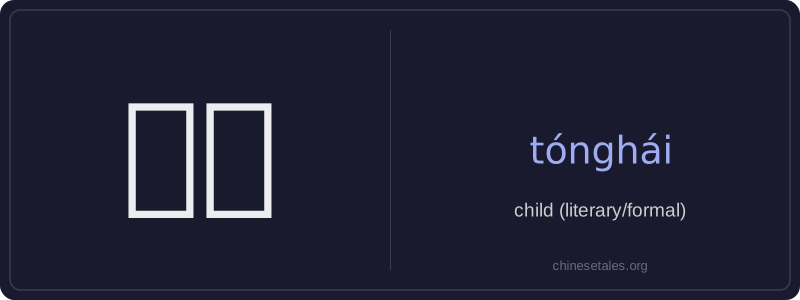
孩童 is a formal or literary noun meaning 'child'—typically referring to young children, especially in written language, official documents, or solemn contexts. The character 孩 (hái) means 'child' and often appears in spoken compounds like 小孩 (xiǎo hái), while 童 (tóng) also means 'child' or 'youth', appearing in words like 儿童 (ér tóng) and 童年 (tóng nián, 'childhood'). Together, 孩童 functions as a compound with reinforced meaning, emphasizing innocence, youthfulness, and vulnerability.
This term is rarely used in casual daily speech; native speakers usually say 孩子 (hái zi) or 小孩 (xiǎo hái) instead. 孩童 appears frequently in news reports about child welfare, education policy, literature, poetry, and humanitarian discourse—e.g., '保护孩童权益' (protecting children’s rights). It carries a gentle, respectful, and slightly elevated tone, evoking care and responsibility rather than familiarity or playfulness.
Example Sentences
Related Words
见面
见面 literally means 'see face' — combining 见 (t
背后
背后 literally means 'back + behind' and functions
中学
'Zhōngxué' literally combines 'zhōng' (middle)
面条
‘面条’ (miàn tiáo) literally means ‘flour str
后来
Later (hòulái) is an adverb meaning 'afterwards'
我的
我的 (wǒ de) is a possessive pronoun meaning 'my'
这么
这么 (zhè me) is an adverb meaning 'so' or 'this
前面
前面 (qián miàn) literally combines 前 (qián, '