Word Explanation
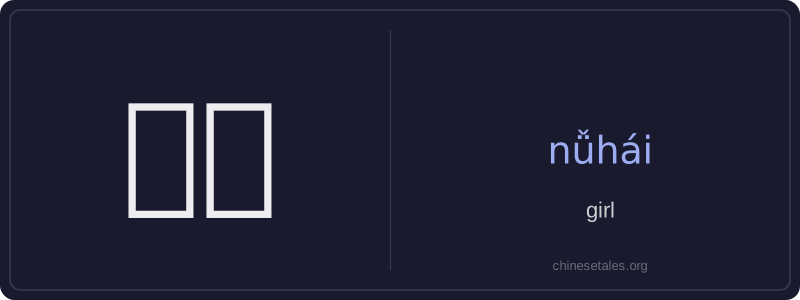
‘女孩’ (nǚhái) literally combines 女 (nǚ), meaning ‘female’ or ‘woman’, and 孩 (hái), meaning ‘child’. Together, they form a common, neutral noun meaning ‘girl’ — typically referring to a female child or young teenager, usually under age 18. It’s widely used in everyday speech, education, media, and official contexts, and carries no strong stylistic register: it’s neither overly formal nor slangy.
The term emphasizes gender and youth but avoids age-specific precision — unlike ‘小女孩’ (xiǎo nǚhái, ‘little girl’) or ‘少女’ (shàonǚ, ‘teenage girl’), which add nuance. ‘女孩’ can refer to daughters, students, friends, or characters in stories; it’s often used in descriptions, introductions, and narratives. It does not imply marital status or social role, distinguishing it from terms like ‘女士’ (lǎoshì, ‘madam’) or ‘姑娘’ (gūniang, which can be more colloquial or regional).
Example Sentences
Related Words
见面
见面 literally means 'see face' — combining 见 (t
背后
背后 literally means 'back + behind' and functions
中学
'Zhōngxué' literally combines 'zhōng' (middle)
面条
‘面条’ (miàn tiáo) literally means ‘flour str
后来
Later (hòulái) is an adverb meaning 'afterwards'
我的
我的 (wǒ de) is a possessive pronoun meaning 'my'
这么
这么 (zhè me) is an adverb meaning 'so' or 'this
前面
前面 (qián miàn) literally combines 前 (qián, '