Word Explanation
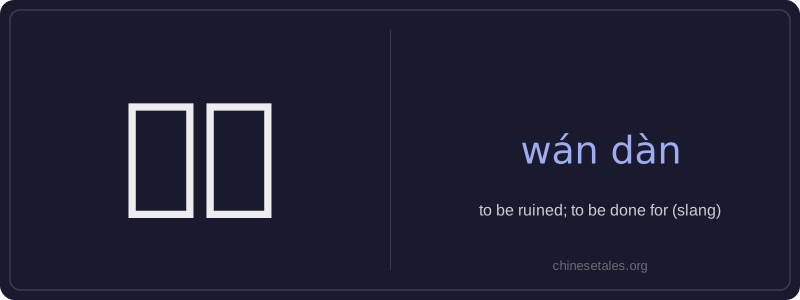
'完蛋' (wán dàn) is a vivid, informal verb meaning 'to be ruined,' 'to be finished,' or 'to be done for.' Literally, 完 means 'complete' or 'finished,' and 蛋 means 'egg'—but together they form an idiom rooted in the image of a broken or spoiled egg, symbolizing total failure or irreversible disaster. It’s often used to express sudden, catastrophic outcomes: a failed exam, a crashed computer, or a relationship ending abruptly.
This expression carries strong emotional weight—usually frustration, despair, or dark humor—and appears frequently in spoken Mandarin and online slang. While it’s not vulgar, it’s colloquial and unsuitable for formal writing or polite professional contexts. Native speakers may exaggerate its use playfully ('完了完了,完蛋了!'), but tone and context determine whether it sounds dramatic, resigned, or joking.
Example Sentences
Related Words
见面
见面 literally means 'see face' — combining 见 (t
背后
背后 literally means 'back + behind' and functions
中学
'Zhōngxué' literally combines 'zhōng' (middle)
面条
‘面条’ (miàn tiáo) literally means ‘flour str
后来
Later (hòulái) is an adverb meaning 'afterwards'
我的
我的 (wǒ de) is a possessive pronoun meaning 'my'
这么
这么 (zhè me) is an adverb meaning 'so' or 'this
前面
前面 (qián miàn) literally combines 前 (qián, '