Word Explanation
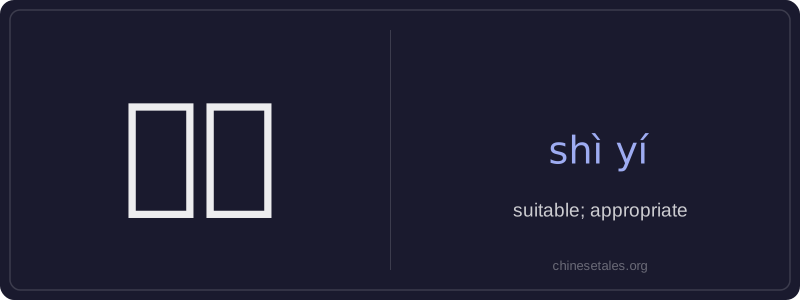
适宜 means 'suitable' or 'appropriate', emphasizing a good match between something and its context—such as climate, environment, or purpose. The character 适 (shì) conveys 'fitting' or 'meeting requirements', while 宜 (yí) adds the sense of 'ought to be' or 'advisable'. Together, they form a formal yet common adjective describing objective compatibility—not personal preference, but factual appropriateness.
This word is frequently used in scientific, agricultural, ecological, and health-related contexts—for example, discussing which animals thrive in certain habitats, which crops grow best in specific soils, or which treatments suit particular conditions. It often appears after a subject and before 的 when modifying a noun (e.g., 适宜的环境), or in predicate position with 是 or 很 (e.g., 这种温度很适宜). It carries a neutral-to-formal register and is more common in writing than casual speech.
Example Sentences
Related Words
见面
见面 literally means 'see face' — combining 见 (t
背后
背后 literally means 'back + behind' and functions
中学
'Zhōngxué' literally combines 'zhōng' (middle)
面条
‘面条’ (miàn tiáo) literally means ‘flour str
后来
Later (hòulái) is an adverb meaning 'afterwards'
我的
我的 (wǒ de) is a possessive pronoun meaning 'my'
这么
这么 (zhè me) is an adverb meaning 'so' or 'this
前面
前面 (qián miàn) literally combines 前 (qián, '