Word Explanation
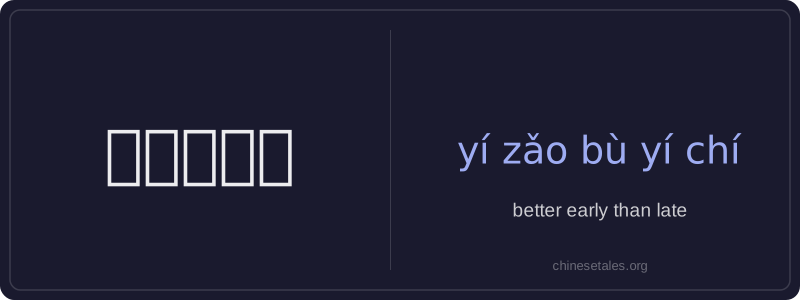
‘宜早不宜迟’ is a fixed four-character idiom meaning ‘better early than late’ or ‘the sooner, the better.’ Literally, 宜 means ‘appropriate’ or ‘advisable,’ 早 means ‘early,’ 不 means ‘not,’ and 迟 means ‘late.’ So the phrase reads: ‘It is advisable to do it early; it is not advisable to delay.’ It expresses urgency and the value of timely action—often implying that postponement may lead to missed opportunities, worsening conditions, or unnecessary complications.
This phrase is commonly used in advice-giving contexts: health care (e.g., seeking treatment), daily decisions (e.g., signing up for courses), business (e.g., finalizing contracts), or personal matters (e.g., apologizing or making amends). It carries a mild, rational tone—not forceful like ‘must,’ but strongly persuasive. While grammatically a noun phrase, it functions adverbially in sentences, typically placed at the beginning or end to emphasize timing priority.
Example Sentences
Related Words
见面
见面 literally means 'see face' — combining 见 (t
背后
背后 literally means 'back + behind' and functions
中学
'Zhōngxué' literally combines 'zhōng' (middle)
面条
‘面条’ (miàn tiáo) literally means ‘flour str
后来
Later (hòulái) is an adverb meaning 'afterwards'
我的
我的 (wǒ de) is a possessive pronoun meaning 'my'
这么
这么 (zhè me) is an adverb meaning 'so' or 'this
前面
前面 (qián miàn) literally combines 前 (qián, '