Word Explanation
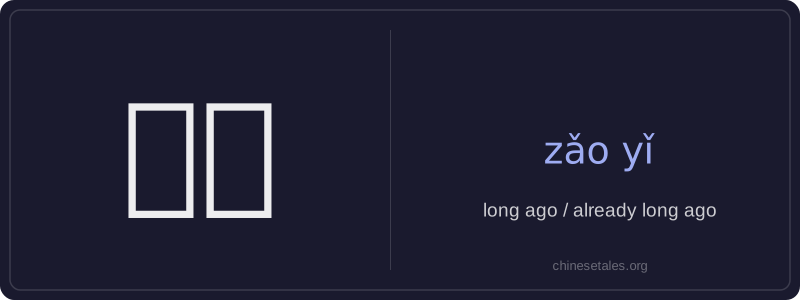
‘早已’ is an adverb meaning 'long ago' or 'already long ago', emphasizing that something happened well before the present moment—or even before a mentioned past time. It combines 早 (zǎo), meaning 'early' or 'long before', and 已 (yǐ), meaning 'already'. Together, they intensify the sense of elapsed time, suggesting not just prior occurrence but considerable temporal distance. It often appears before verbs or verb phrases, especially in formal or literary contexts, and carries a tone of certainty or inevitability.
This expression is commonly used in narratives, historical descriptions, scientific explanations, or when expressing assumptions based on prior knowledge (e.g., 'He had long since realized...'). Unlike the simpler 已经 (yǐjīng), 早已 adds weight and emphasis—implying the action was completed so far in the past that its result feels settled or unsurprising. It’s rarely used in casual spoken Chinese but appears frequently in writing, news reports, and academic texts.
Example Sentences
Related Words
见面
见面 literally means 'see face' — combining 见 (t
背后
背后 literally means 'back + behind' and functions
中学
'Zhōngxué' literally combines 'zhōng' (middle)
面条
‘面条’ (miàn tiáo) literally means ‘flour str
后来
Later (hòulái) is an adverb meaning 'afterwards'
我的
我的 (wǒ de) is a possessive pronoun meaning 'my'
这么
这么 (zhè me) is an adverb meaning 'so' or 'this
前面
前面 (qián miàn) literally combines 前 (qián, '