Word Explanation
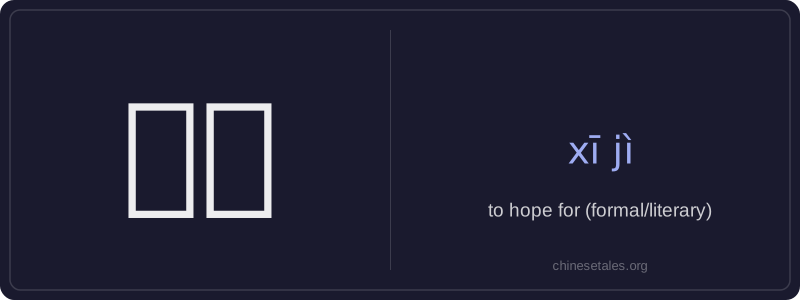
希冀 (xī jì) is a formal, literary verb meaning 'to hope for' or 'to yearn for'—often with a sense of earnestness, aspiration, or quiet longing. Though composed of two characters both carrying meanings related to hope and expectation (希: 'to hope, to wish'; 冀: 'to hope, to expect'), together they form a compound that emphasizes deep, often idealistic or unfulfilled desire. It appears frequently in written Chinese—especially in essays, poetry, speeches, and classical-influenced prose—but is rarely used in casual spoken conversation.
The word conveys emotional weight and sincerity, sometimes tinged with vulnerability or humility. Unlike the more neutral 希望 (xī wàng), 希冀 suggests a hope that is less certain, more heartfelt, and occasionally even poignant—perhaps because it implies effort, patience, or waiting. It commonly pairs with abstract nouns like 和平 (peace), 幸福 (happiness), or 明天 (tomorrow), and often appears after subjects expressing personal or collective aspiration, such as '我们' (we) or '人类' (humanity).
Example Sentences
Related Words
见面
见面 literally means 'see face' — combining 见 (t
背后
背后 literally means 'back + behind' and functions
中学
'Zhōngxué' literally combines 'zhōng' (middle)
面条
‘面条’ (miàn tiáo) literally means ‘flour str
后来
Later (hòulái) is an adverb meaning 'afterwards'
我的
我的 (wǒ de) is a possessive pronoun meaning 'my'
这么
这么 (zhè me) is an adverb meaning 'so' or 'this
前面
前面 (qián miàn) literally combines 前 (qián, '