Word Explanation
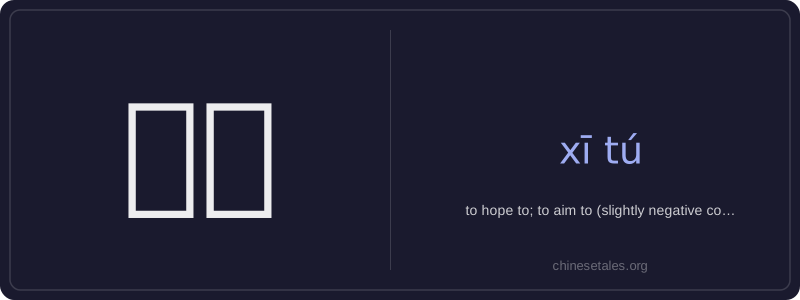
希图 (xī tú) is a formal, literary verb meaning 'to hope to' or 'to aim to', but it carries a subtle negative or skeptical nuance — often implying that the goal is unrealistic, overly ambitious, or morally questionable. The character 希 means 'to hope for' or 'to wish', while 图 means 'to plan', 'to scheme', or 'to seek'. Together, they suggest not just aspiration, but an active, sometimes calculating effort toward an outcome that others may view as dubious or improper.
This word appears frequently in written Chinese — especially in classical texts, news reports, and formal commentary — but is rarely used in casual speech. It often collocates with verbs indicating gain, advantage, or evasion (e.g., 希图获利, 希图逃避). Because of its critical undertone, using 希图 instead of neutral alternatives like 希望 or 打算 can subtly signal disapproval or irony, even without explicit judgment.
Example Sentences
Related Words
见面
见面 literally means 'see face' — combining 见 (t
背后
背后 literally means 'back + behind' and functions
中学
'Zhōngxué' literally combines 'zhōng' (middle)
面条
‘面条’ (miàn tiáo) literally means ‘flour str
后来
Later (hòulái) is an adverb meaning 'afterwards'
我的
我的 (wǒ de) is a possessive pronoun meaning 'my'
这么
这么 (zhè me) is an adverb meaning 'so' or 'this
前面
前面 (qián miàn) literally combines 前 (qián, '