Word Explanation
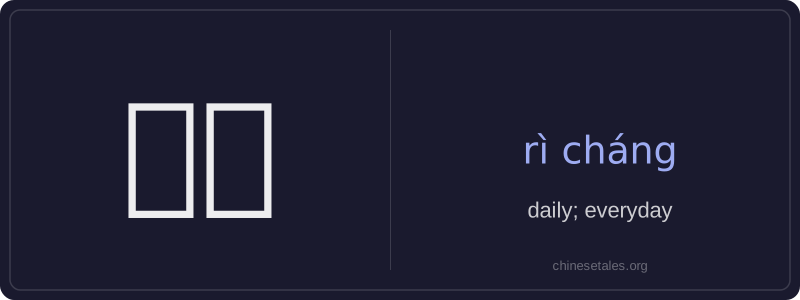
日常 (rì cháng) literally combines 日 (rì), meaning 'sun' or 'day', and 常 (cháng), meaning 'usual' or 'common'. Together, they form an adjective meaning 'daily' or 'everyday', describing things that occur regularly as part of ordinary life—not special, extraordinary, or occasional events. It emphasizes routine, familiarity, and repetition.
This word is commonly used to modify nouns—e.g., 日常生活 (rì cháng shēnghuó, 'daily life'), 日常工作 (rì cháng gōngzuò, 'routine work'), or 日常交流 (rì cháng jiāoliú, 'everyday communication'). While it can occasionally function as a noun ('the everyday'), its primary role is adjectival. It carries a neutral, slightly formal tone and appears frequently in written and spoken Chinese when discussing habits, schedules, or mundane activities.
Example Sentences
Related Words
见面
见面 literally means 'see face' — combining 见 (t
背后
背后 literally means 'back + behind' and functions
中学
'Zhōngxué' literally combines 'zhōng' (middle)
面条
‘面条’ (miàn tiáo) literally means ‘flour str
后来
Later (hòulái) is an adverb meaning 'afterwards'
我的
我的 (wǒ de) is a possessive pronoun meaning 'my'
这么
这么 (zhè me) is an adverb meaning 'so' or 'this
前面
前面 (qián miàn) literally combines 前 (qián, '