Word Explanation
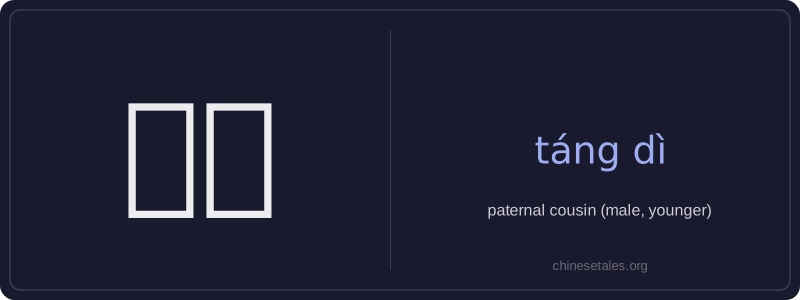
‘Táng dì’ refers specifically to a male cousin on your father’s side who is younger than you. The character ‘堂’ (táng) indicates a relationship through the paternal line — it literally means ‘hall’ or ‘main hall’, symbolizing shared ancestral lineage and same-surname kinship within the father’s family branch. ‘弟’ (dì) means ‘younger brother’, signaling both gender and relative age. Unlike ‘biǎo dì’ (maternal cousin), ‘táng dì’ implies closer familial ties in traditional Chinese kinship structure, often involving shared childhood experiences, joint ancestral rituals, and mutual obligations.
This term is used formally and informally in daily conversation when referring to or addressing such a cousin — for example, in family gatherings, introductions, or stories about relatives. It is not used for cousins of the same age or older; those are ‘táng xiōng’ (older paternal male cousin) or simply ‘táng jiāo’ (paternal cousin, gender-neutral but less common). Context always clarifies whether the reference is to a specific person or a general category.
Example Sentences
Related Words
见面
见面 literally means 'see face' — combining 见 (t
背后
背后 literally means 'back + behind' and functions
中学
'Zhōngxué' literally combines 'zhōng' (middle)
面条
‘面条’ (miàn tiáo) literally means ‘flour str
后来
Later (hòulái) is an adverb meaning 'afterwards'
我的
我的 (wǒ de) is a possessive pronoun meaning 'my'
这么
这么 (zhè me) is an adverb meaning 'so' or 'this
前面
前面 (qián miàn) literally combines 前 (qián, '