Word Explanation
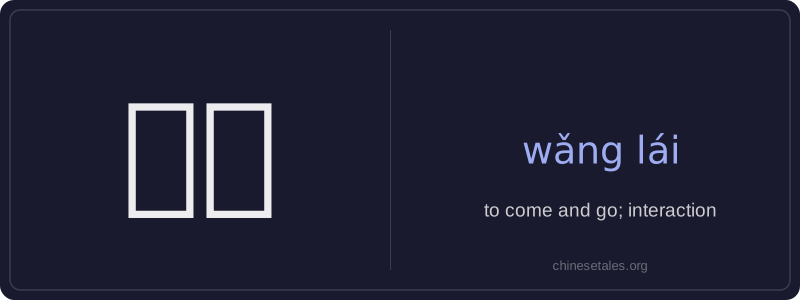
‘往来’ (wǎng lái) literally combines ‘往’ (to go toward, to head to) and ‘来’ (to come), forming a balanced, reciprocal concept of movement in both directions — ‘to come and go’. As a noun, it refers to regular interaction or exchange between people, organizations, or places; as a verb, it describes the act of moving back and forth or maintaining ongoing contact. It often implies continuity, frequency, and mutual engagement — not just one-time movement but sustained connection.
This term appears frequently in formal and semi-formal contexts: business communication (e.g., ‘业务往来’ — business dealings), transportation (e.g., ‘航班往来频繁’ — frequent flight traffic), and social relationships (e.g., ‘邻里往来’ — neighborly interaction). While it can describe physical movement, its more common and nuanced use is abstract — denoting relational or functional exchange. It carries a neutral-to-positive connotation and rarely appears in casual speech among young native speakers, who might prefer simpler alternatives like ‘联系’ (contact) or ‘走动’ (visit regularly).
Example Sentences
Related Words
见面
见面 literally means 'see face' — combining 见 (t
背后
背后 literally means 'back + behind' and functions
中学
'Zhōngxué' literally combines 'zhōng' (middle)
面条
‘面条’ (miàn tiáo) literally means ‘flour str
后来
Later (hòulái) is an adverb meaning 'afterwards'
我的
我的 (wǒ de) is a possessive pronoun meaning 'my'
这么
这么 (zhè me) is an adverb meaning 'so' or 'this
前面
前面 (qián miàn) literally combines 前 (qián, '