Word Explanation
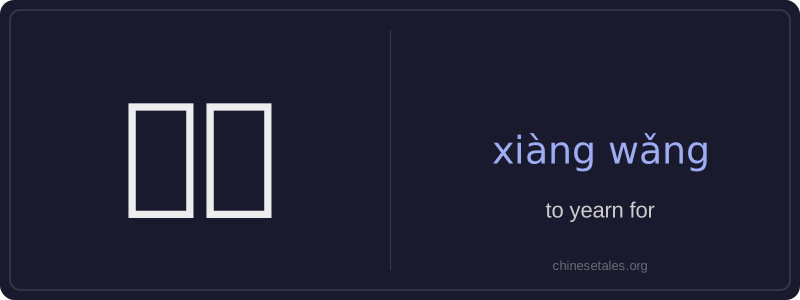
‘向往’ is a verb meaning ‘to yearn for’, ‘to long for’, or ‘to aspire to’. It expresses a deep, positive emotional desire—often for something idealized, distant, or not yet attained—such as a place, lifestyle, value, or future state. The character 向 (xiàng) means ‘toward’ or ‘in the direction of’, while 往 (wǎng) means ‘to go’ or ‘to head toward’; together, they vividly convey the sense of mentally or emotionally moving toward something desirable.
This word carries a gentle, poetic, and somewhat literary tone—it’s common in writing, speeches, and formal or reflective speech, but less frequent in casual daily talk (where 想要 or 希望 may be preferred). It often implies admiration, hope, or idealism rather than urgent need or urgency. People commonly use it when expressing aspirations about life goals, travel dreams, social ideals, or personal growth.
Example Sentences
Related Words
见面
见面 literally means 'see face' — combining 见 (t
背后
背后 literally means 'back + behind' and functions
中学
'Zhōngxué' literally combines 'zhōng' (middle)
面条
‘面条’ (miàn tiáo) literally means ‘flour str
后来
Later (hòulái) is an adverb meaning 'afterwards'
我的
我的 (wǒ de) is a possessive pronoun meaning 'my'
这么
这么 (zhè me) is an adverb meaning 'so' or 'this
前面
前面 (qián miàn) literally combines 前 (qián, '