Word Explanation
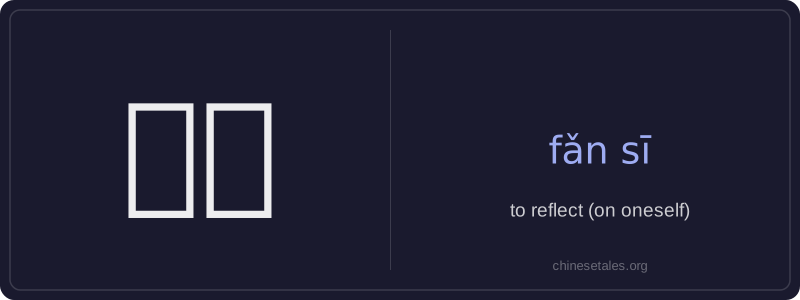
反思 means 'to reflect (on oneself)' — specifically, to thoughtfully examine one’s own actions, decisions, or experiences in order to learn and improve. The character 反 (fǎn) means 'to reverse' or 'to turn back', suggesting a mental turning inward or backward toward past behavior; 思 (sī) means 'to think' or 'to consider'. Together, they convey the idea of turning one’s thoughts back on oneself with critical awareness and humility. This word carries a serious, introspective tone and is commonly used in educational, professional, and personal growth contexts.
Unlike casual thinking, 反思 implies purposeful self-evaluation, often after a mistake, challenge, or significant event. It is frequently found in academic writing, workplace feedback, moral education, and mindfulness practices. While it can be used as a noun ('a reflection'), its core function is verbal — describing the active process of self-examination. It is not interchangeable with general terms like 想 (xiǎng, 'to think') or 考虑 (kǎo lǜ, 'to consider'), as it emphasizes ethical or behavioral accountability.
Example Sentences
Related Words
见面
见面 literally means 'see face' — combining 见 (t
背后
背后 literally means 'back + behind' and functions
中学
'Zhōngxué' literally combines 'zhōng' (middle)
面条
‘面条’ (miàn tiáo) literally means ‘flour str
后来
Later (hòulái) is an adverb meaning 'afterwards'
我的
我的 (wǒ de) is a possessive pronoun meaning 'my'
这么
这么 (zhè me) is an adverb meaning 'so' or 'this
前面
前面 (qián miàn) literally combines 前 (qián, '