Word Explanation
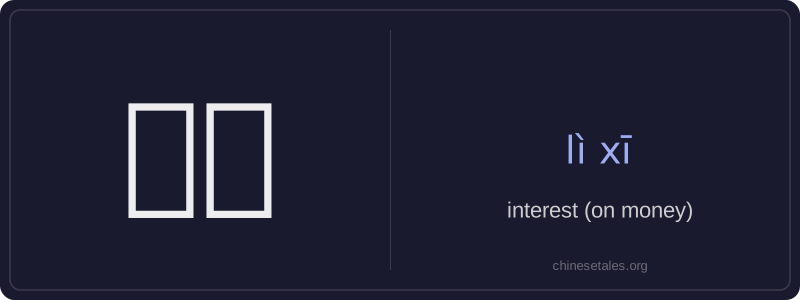
利息 (lì xī) means 'interest' — specifically the money earned on savings or paid on loans. It combines 利 (lì), meaning 'profit' or 'gain', and 息 (xī), meaning 'interest', 'breath', or 'rest', but here it carries the financial sense of 'return on capital'. Together, they form a compound noun exclusively used in monetary contexts — never for biological, emotional, or abstract 'interest' (like curiosity, which is 兴趣 xìngqù).
This term appears frequently in banking, finance, and everyday discussions about money — for example, when comparing bank deposit rates, calculating loan costs, or reading financial news. It’s always uncountable in Chinese and doesn’t take measure words like 个; instead, it’s quantified with terms like 年利率 (annual interest rate) or 百分之五的利息 (5% interest). Unlike English, 利息 is never used as a verb — you don’t 'interest' something; you 'earn' (赚) or 'pay' (支付) interest.
Example Sentences
Related Words
见面
见面 literally means 'see face' — combining 见 (t
背后
背后 literally means 'back + behind' and functions
中学
'Zhōngxué' literally combines 'zhōng' (middle)
面条
‘面条’ (miàn tiáo) literally means ‘flour str
后来
Later (hòulái) is an adverb meaning 'afterwards'
我的
我的 (wǒ de) is a possessive pronoun meaning 'my'
这么
这么 (zhè me) is an adverb meaning 'so' or 'this
前面
前面 (qián miàn) literally combines 前 (qián, '