Word Explanation
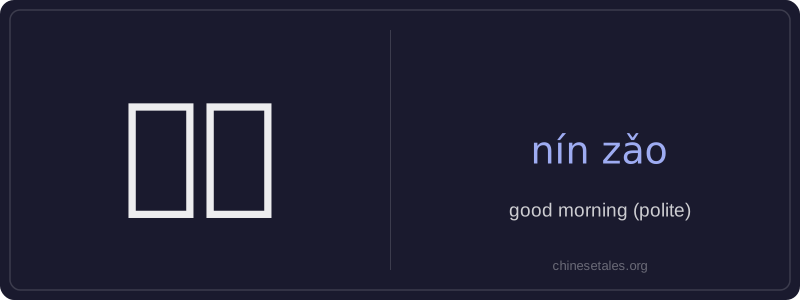
‘您早’ (nín zǎo) is a polite, formal greeting used specifically in the morning, equivalent to 'Good morning' in English. It combines the honorific second-person pronoun 您 (nín), which conveys respect toward elders, superiors, or strangers, and 早 (zǎo), meaning 'early' or 'morning'. Unlike the neutral 你好 (nǐ hǎo), 您早 carries a warm yet deferential tone appropriate for professional settings, family interactions with older relatives, or meeting acquaintances early in the day.
This expression is commonly used from sunrise until around 10 a.m., especially when encountering someone for the first time that day — for example, greeting a neighbor in the hallway, a teacher upon entering class, or a client arriving at an office. While grammatically simple, its use signals cultural awareness: using 您 instead of 你 shows intentional respect, and pairing it with 早 (rather than a full phrase like 您早上好) creates a concise, natural-sounding salutation widely recognized across Mandarin-speaking regions.
Example Sentences
Related Words
见面
见面 literally means 'see face' — combining 见 (t
背后
背后 literally means 'back + behind' and functions
中学
'Zhōngxué' literally combines 'zhōng' (middle)
面条
‘面条’ (miàn tiáo) literally means ‘flour str
后来
Later (hòulái) is an adverb meaning 'afterwards'
我的
我的 (wǒ de) is a possessive pronoun meaning 'my'
这么
这么 (zhè me) is an adverb meaning 'so' or 'this
前面
前面 (qián miàn) literally combines 前 (qián, '