Word Explanation
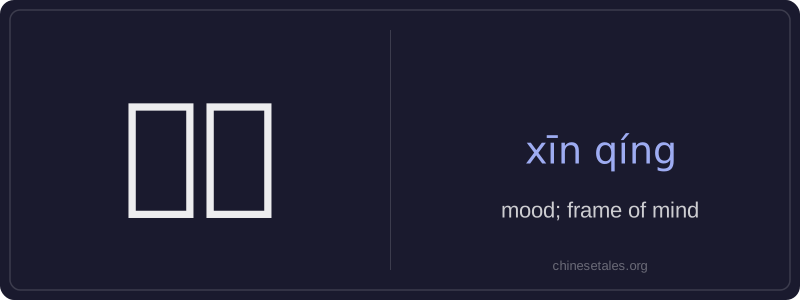
‘Xīn qíng’ literally combines 心 (xīn), meaning 'heart' or 'mind', and 情 (qíng), meaning 'feeling' or 'emotion'. Together, they form a noun that refers to one’s current emotional state — not just fleeting feelings, but a broader, relatively stable frame of mind, like being cheerful, downcast, relaxed, or anxious. It reflects how someone feels internally at a given time, often influenced by events, environment, or physical condition.
This word is commonly used in daily conversation, writing, and psychological contexts. You’ll hear it in expressions like ‘心情不好’ (in a bad mood) or ‘心情很好’ (in a great mood). Unlike more clinical terms like ‘情绪’ (emotions, often implying stronger, more volatile states), ‘心情’ tends to sound gentler and more personal — it’s the everyday way people describe their inner weather. It’s rarely used as a verb or adjective; it functions almost exclusively as a subject or object in sentences.
Example Sentences
Related Words
见面
见面 literally means 'see face' — combining 见 (t
背后
背后 literally means 'back + behind' and functions
中学
'Zhōngxué' literally combines 'zhōng' (middle)
面条
‘面条’ (miàn tiáo) literally means ‘flour str
后来
Later (hòulái) is an adverb meaning 'afterwards'
我的
我的 (wǒ de) is a possessive pronoun meaning 'my'
这么
这么 (zhè me) is an adverb meaning 'so' or 'this
前面
前面 (qián miàn) literally combines 前 (qián, '