Word Explanation
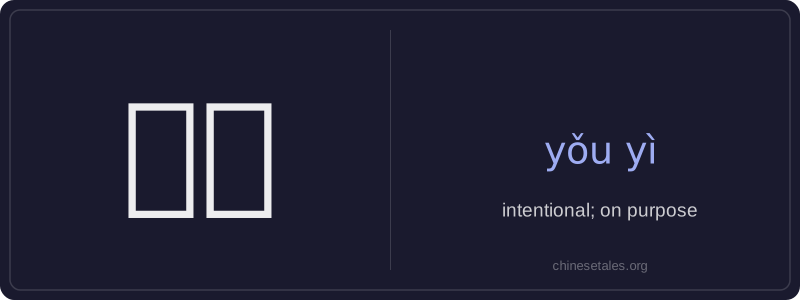
'有意' (yǒu yì) is an adjective meaning 'intentional' or 'on purpose'. It combines the verb 有 (yǒu, 'to have') and the noun 意 (yì, 'intention' or 'meaning'), literally conveying 'having intention'. Unlike standalone verbs or nouns, 有意 functions as a predicative or attributive adjective — it typically appears before a noun (e.g., 有意的行动) or after a subject with 是 or in a predicate (e.g., 他是有意的). It carries a neutral-to-slightly-negative connotation depending on context, often implying deliberate choice, sometimes with undertones of calculated or even provocative intent.
This term is common in formal speech, written reports, and psychological or legal contexts where motive matters — for instance, describing someone’s deliberate behavior in conflict resolution or workplace conduct. It is not used for casual, light-hearted intentions (for which you’d use 打算 or 想); instead, it emphasizes conscious, volitional action, often with observable consequences. Learners should note that 有意 is rarely used in isolation as a sentence-final particle — it requires syntactic support like 是…的 or adverbial modifiers (e.g., 故意, 特意) to clarify degree or attitude.
Example Sentences
Related Words
见面
见面 literally means 'see face' — combining 见 (t
背后
背后 literally means 'back + behind' and functions
中学
'Zhōngxué' literally combines 'zhōng' (middle)
面条
‘面条’ (miàn tiáo) literally means ‘flour str
后来
Later (hòulái) is an adverb meaning 'afterwards'
我的
我的 (wǒ de) is a possessive pronoun meaning 'my'
这么
这么 (zhè me) is an adverb meaning 'so' or 'this
前面
前面 (qián miàn) literally combines 前 (qián, '