Word Explanation
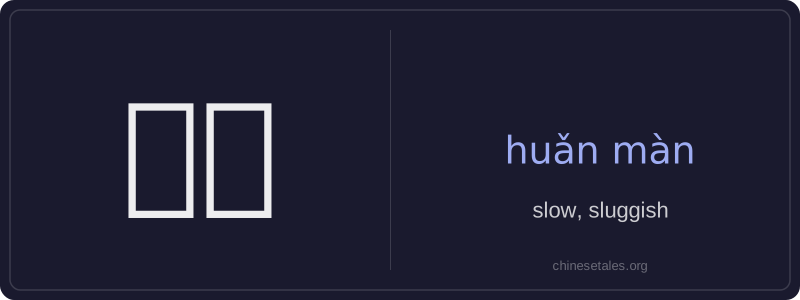
缓慢 is an adjective meaning 'slow' or 'sluggish', emphasizing a notably low speed or delayed progression—often with a neutral or slightly negative connotation, suggesting inefficiency, hesitation, or natural limitation. The character 缓 means 'to ease', 'to delay', or 'to slacken', while 慢 means 'slow' or 'leisurely'; together, they reinforce slowness more strongly than either character alone. Unlike the simpler 慢, 缓慢 is commonly used in formal, descriptive, or observational contexts—such as scientific reports, medical descriptions, or narrative writing—to highlight the degree or quality of slowness.
This word frequently modifies verbs (e.g., 缓慢移动) or serves as a predicate (e.g., 进展缓慢). It’s especially common when describing biological processes (e.g., animal movement, healing, aging), mechanical functions (e.g., system response), or abstract developments (e.g., economic growth, recovery). It rarely stands alone as a noun and is not used in casual speech as often as 慢 or 慢慢地.
Example Sentences
Related Words
见面
见面 literally means 'see face' — combining 见 (t
背后
背后 literally means 'back + behind' and functions
中学
'Zhōngxué' literally combines 'zhōng' (middle)
面条
‘面条’ (miàn tiáo) literally means ‘flour str
后来
Later (hòulái) is an adverb meaning 'afterwards'
我的
我的 (wǒ de) is a possessive pronoun meaning 'my'
这么
这么 (zhè me) is an adverb meaning 'so' or 'this
前面
前面 (qián miàn) literally combines 前 (qián, '