Word Explanation
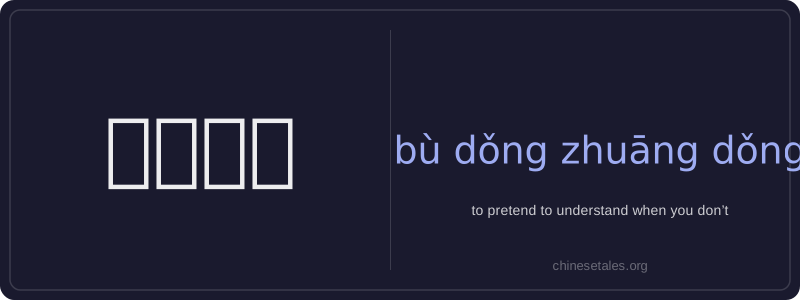
'Bù dǒng zhuāng dǒng' literally means 'not understand, pretend to understand' — a vivid four-character idiom describing the act of feigning comprehension to avoid embarrassment, save face, or appear competent. Each character contributes directly: 不 (not), 懂 (understand), 装 (pretend), and 懂 again (understand), creating a rhythmic, slightly ironic repetition that underscores the falseness of the performance.
This expression is commonly used in informal speech and writing to criticize or humorously point out someone’s intellectual dishonesty — especially in learning, professional, or social settings where people hesitate to admit ignorance. It carries a mildly negative or teasing tone, often implying immaturity, insecurity, or poor self-awareness. While not extremely formal, it’s widely understood across age groups and appears frequently in conversations, online comments, and light media.
Example Sentences
Related Words
见面
见面 literally means 'see face' — combining 见 (t
背后
背后 literally means 'back + behind' and functions
中学
'Zhōngxué' literally combines 'zhōng' (middle)
面条
‘面条’ (miàn tiáo) literally means ‘flour str
后来
Later (hòulái) is an adverb meaning 'afterwards'
我的
我的 (wǒ de) is a possessive pronoun meaning 'my'
这么
这么 (zhè me) is an adverb meaning 'so' or 'this
前面
前面 (qián miàn) literally combines 前 (qián, '