Word Explanation
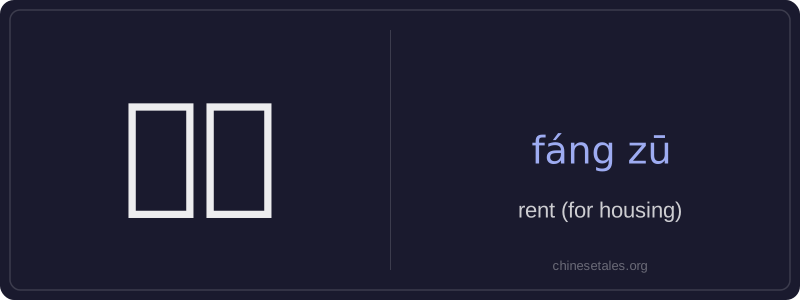
‘房租’ (fáng zū) literally combines 房 (fáng), meaning 'house' or 'room', and 租 (zū), meaning 'to rent' or 'rental'. Together, it specifically refers to the money paid regularly—usually monthly—for the use of housing, such as an apartment, house, or room. Unlike general rental fees for cars or equipment, 房租 applies exclusively to residential accommodation.
This word is commonly used in daily life when discussing living arrangements, budgeting, or signing leases. It appears frequently in conversations about moving, sharing housing costs with roommates, or negotiating terms with landlords. While 房 can refer broadly to buildings, and 租 alone means 'rent' as a verb or noun, the compound 房租 is fixed and functions only as a noun denoting housing rent. It’s neutral in register—appropriate in both spoken and written contexts—and often appears with time phrases (e.g., 每月房租 'monthly rent') or amounts (e.g., 三千元房租 '3,000-yuan rent').
Example Sentences
Related Words
见面
见面 literally means 'see face' — combining 见 (t
背后
背后 literally means 'back + behind' and functions
中学
'Zhōngxué' literally combines 'zhōng' (middle)
面条
‘面条’ (miàn tiáo) literally means ‘flour str
后来
Later (hòulái) is an adverb meaning 'afterwards'
我的
我的 (wǒ de) is a possessive pronoun meaning 'my'
这么
这么 (zhè me) is an adverb meaning 'so' or 'this
前面
前面 (qián miàn) literally combines 前 (qián, '