Word Explanation
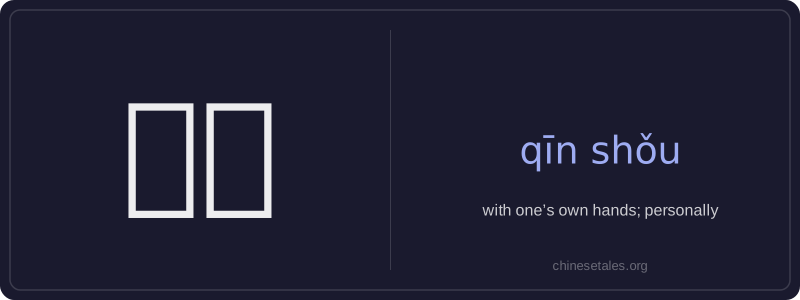
'亲手' is an adverb meaning 'with one’s own hands' or 'personally'. It combines the character 亲 (qīn), meaning 'close', 'intimate', or 'personal', and 手 (shǒu), meaning 'hand'. Together, they emphasize direct, unmediated involvement—highlighting that the subject performed the action themselves, without assistance or delegation. It often conveys sincerity, care, effort, or emotional significance.
This word frequently appears in contexts involving creation, giving, cooking, writing, or caregiving—such as making a gift, preparing food, or signing a document. It can modify verbs directly (e.g., 亲手做, 亲手写) and usually precedes the verb it modifies. While it literally references hands, it's figurative: it stresses agency and personal investment, not literal hand use. It carries a warm, respectful, or earnest tone and is common in both spoken and written Chinese, especially in narratives, thank-you messages, or descriptions of meaningful actions.
Example Sentences
Related Words
见面
见面 literally means 'see face' — combining 见 (t
背后
背后 literally means 'back + behind' and functions
中学
'Zhōngxué' literally combines 'zhōng' (middle)
面条
‘面条’ (miàn tiáo) literally means ‘flour str
后来
Later (hòulái) is an adverb meaning 'afterwards'
我的
我的 (wǒ de) is a possessive pronoun meaning 'my'
这么
这么 (zhè me) is an adverb meaning 'so' or 'this
前面
前面 (qián miàn) literally combines 前 (qián, '