Word Explanation
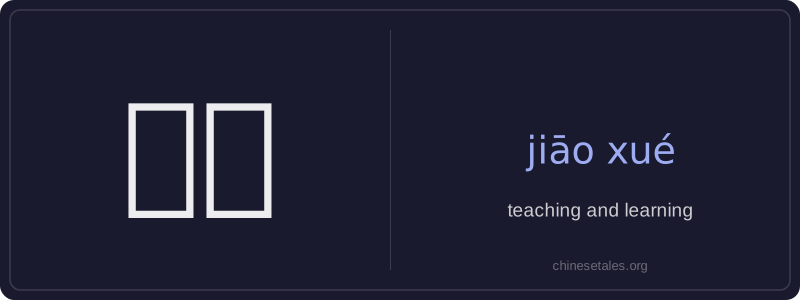
教学 literally combines 教 (jiāo, 'to teach') and 学 (xué, 'to learn'), representing the integrated process of teaching and learning — not just instruction in isolation, but the dynamic interaction between teacher and learner. It emphasizes the reciprocal nature of education: effective teaching requires understanding how students learn, and meaningful learning depends on thoughtful guidance.
This term is commonly used in formal or institutional contexts — such as school curricula, teacher training, educational research, and policy discussions. While it can appear in everyday speech (e.g., when discussing a teacher’s approach), it carries a more professional or academic tone than simpler words like 上课 ('to have class') or 教书 ('to teach'). It often appears in compound nouns like 教学方法 (teaching methodology) or 教学质量 (teaching quality).
Example Sentences
Related Words
见面
见面 literally means 'see face' — combining 见 (t
背后
背后 literally means 'back + behind' and functions
中学
'Zhōngxué' literally combines 'zhōng' (middle)
面条
‘面条’ (miàn tiáo) literally means ‘flour str
后来
Later (hòulái) is an adverb meaning 'afterwards'
我的
我的 (wǒ de) is a possessive pronoun meaning 'my'
在家
'Zài jiā' literally combines the preposition 'z
不对
不对 (bù duì) literally combines 不 (bù), meani