Word Explanation
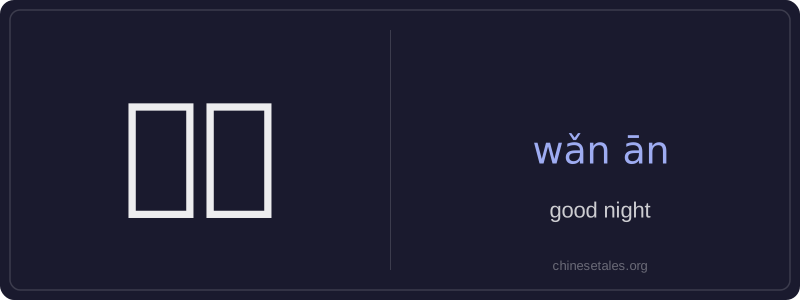
"Wǎn ān" is a polite and warm interjection used to bid someone good night, typically before going to sleep. The character 晚 (wǎn) means 'evening' or 'late', and 安 (ān) means 'peace', 'safety', or 'to rest'. Together, they literally convey the wish for a peaceful, restful evening — essentially 'may you have a peaceful night'. It is not a noun describing an object or concept, but rather a fixed phrase used exclusively as a farewell greeting at bedtime.
This expression is appropriate in both formal and informal contexts — spoken to family members, friends, colleagues, or even in written messages like texts or emails before sleeping. Unlike English 'good night', it is rarely used ironically or as part of a longer sentence; it stands alone as a complete, courteous closing. It carries gentle warmth and care, especially when said to children or elders, and reflects Chinese cultural emphasis on harmony and well-wishing in daily interactions.
Example Sentences
Related Words
见面
见面 literally means 'see face' — combining 见 (t
背后
背后 literally means 'back + behind' and functions
中学
'Zhōngxué' literally combines 'zhōng' (middle)
面条
‘面条’ (miàn tiáo) literally means ‘flour str
后来
Later (hòulái) is an adverb meaning 'afterwards'
我的
我的 (wǒ de) is a possessive pronoun meaning 'my'
在家
'Zài jiā' literally combines the preposition 'z
不对
不对 (bù duì) literally combines 不 (bù), meani